100% FREE CONSULTANCY

Legal translation for law firms: precision is nonnegotiable, especially when it comes to legal translation. Whether you are preparing case files for court, drafting pleadings, or closing complex M&A deals, a single mistranslation can alter meaning, compromise strategy, or delay proceedings.
This cluster guide unpacks how law firms can secure reliable, court-ready translations for litigation and transactional work, with special attention to practices in the UAE. For a broader foundation on providers, processes, and quality frameworks, see the pillar resource here: Complete overview: “The Ultimate Guide to Legal Translation Services.”
Why Legal Translation Matters for Law Firms in the UAE
In the UAE, most onshore courts operate in Arabic, and filings must generally be submitted in Arabic with certified translations. Free zone jurisdictions such as DIFC and ADGM operate primarily in English, but Arabic translations are often needed for onshore enforcement or government interactions. Corporate deals with multi-jurisdictional parties commonly require bilingual documentation to satisfy both local regulators and counterparties. Accurate legal translation minimizes disputes over meaning, protects the integrity of legal arguments, and keeps transactions on schedule.
Q Links Legal Translation Services, a Dubai-based provider, supports legal translation for law firms with court-ready certified translations and rapid, secure delivery online or via doorstep service. Our experienced legal linguists handle litigation and transactional documents with context-aware terminology, consistent formatting, and defensible quality assurance.
Translating Case Files: From Discovery to Court Exhibits

Case files encompass heterogeneous materials: evidence records, medical reports, expert opinions, witness statements, financial statements, contracts, correspondence, and police reports. Each document type demands specific treatment. For example, witness statements require fidelity to voice and nuance; expert reports demand consistent technical terminology; and letters or emails must be translated with attention to tone and idiomatic usage.
Common Case File Documents
- Contracts, purchase orders, invoices, and payment records
- Corporate documents: articles of association, board resolutions, powers of attorney
- Medical and technical reports, expert witness opinions
- Correspondence and email threads relevant to the dispute
- Government records, police reports, and court orders
Best Practices for Case File Translation
- Context provision: Share the case outline and key legal issues so translators capture the right sense of contested terms.
- Exhibit labeling: Maintain consistent exhibit numbering, headers, and cross-references to avoid confusion in court.
- Terminology control: Use a case-specific glossary to unify terminology across hundreds of pages and multiple translators.
- Evidence integrity: Preserve stamps, seals, annotations, and pagination in the translation through comments or notes.
- Parallel proofreading: For high-stakes evidence, use a second linguist for legal and factual consistency checks.
Legal translation for law firms: you can request certified translations accepted by UAE authorities and courts. We also offer bilingual layouts that mirror exhibit formatting, making court review straightforward and reducing back and forth.
Translating Pleadings and Court Submissions: Precision and Procedure
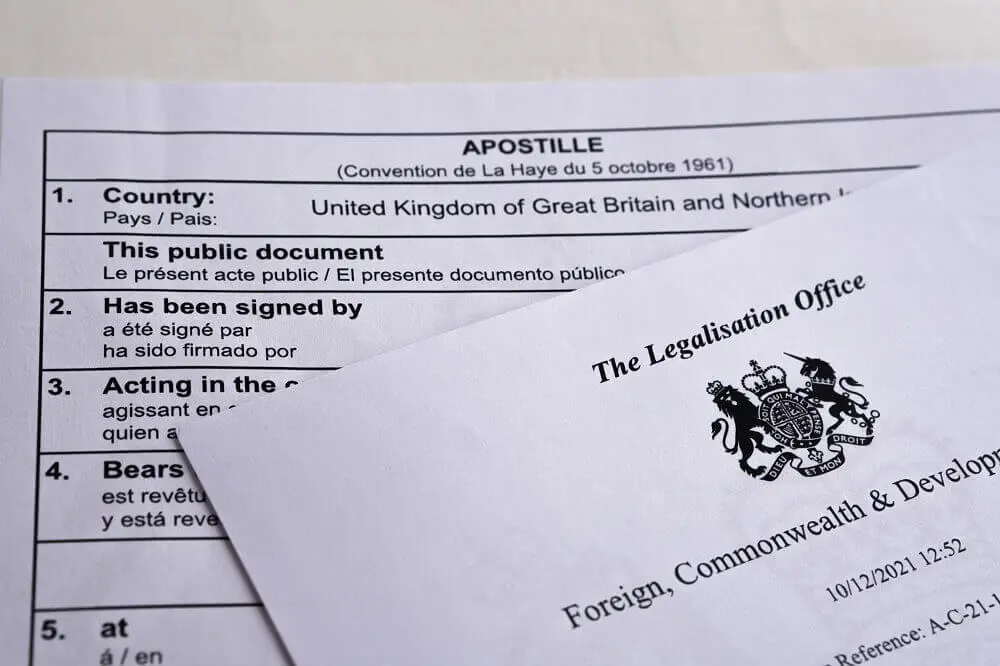
Pleadings, motions, memoranda, and judgments hinge on precise terminology and structured argumentation. The translator must reproduce defined terms, headings, citations, and relief sought exactly and incorporate court-appropriate register (formal language, conventional phrases) without drifting into interpretation. Formatting cues like bold headings, numbered paragraphs, and defined terms in capitals are not stylistic; they are functional. Misplacement can confuse the court’s reading and impair your position.
Key Requirements for Pleadings
- Defined terms: Keep consistent capitalization and definitions across the entire case record.
- Citations: Reproduce statute and case references accurately and in the target language’s conventional format where applicable.
- Relief and prayers: Translate with legal exactness to match the requested orders or remedies.
- Confidential information: Apply redaction protocols consistently in both source and target versions.
For UAE onshore filings, certified Arabic translations may be required for attachments and pleadings originally drafted in English. In bilingual matters, legal translation for law firms coordinates English-to-Arabic translation teams with legal backgrounds to ensure arguments are preserved. Our project managers align schedule milestones with filing deadlines and provide version control to track any mid-draft changes.
M&A Transactions: Translating Due Diligence, SPAs, and Corporate Resolutions

In mergers and acquisitions, legal translation intersects with corporate law, finance, tax, HR, and regulatory compliance. Stakeholders include cross-border counsel, bankers, and regulators—each with distinct terminology and format expectations. From NDA and term sheet through closing and post-closing integration, translation should be planned as a workstream to avoid last-minute bottlenecks.
Documents Commonly Translated in M&A
- NDAs, term sheets, letters of intent, and MOUs
- Share purchase agreements (SPAs), shareholders’ agreements (SHAs), and asset transfer agreements
- Disclosure letters and schedules
- Corporate documents: certificates of incorporation, articles, resolutions, registers
- Employment contracts, HR policies, and benefits plans
- Commercial contracts, leases, and vendor agreements
- Financial statements and auditors’ reports
- Regulatory filings, licenses, and approvals
How to Derisk Translation in the Deal Timeline
- Start early: Flag translation needs at due diligence kick-off to allocate capacity for large data rooms.
- Prioritize by materiality: Translate high-impact contracts first (change-of-control, exclusivity, termination rights).
- Use a bilingual term sheet: Fix key defined terms in both languages to avoid friction later.
- Lock a glossary and style sheet: Share with all translators across the deal to maintain consistency.
- Plan for sign and close: Reserve time for certified translations of resolutions, powers of attorney, and official forms.
Comparison: Case Files vs. Pleadings vs. M&A Translation
| Aspect | Case Files | Pleadings | M&A |
|---|---|---|---|
| Primary Goal | Faithful record for evidence and review | Exact legal argument preservation for court | Risk clarity, compliance, timely closing |
| Terminology | Varied (technical, financial, medical) | Procedural and doctrinal legal terms | Corporate, finance, regulatory |
| Formatting Sensitivity | Exhibit numbering, annotations, seals | Headings, numbered paragraphs, definitions | Defined terms, clause numbering, schedules |
| Certification Needs | Often required for court submissions | Commonly required for onshore filings | Required for corporate actions and filings |
| Turnaround Drivers | Volume and document diversity | Filing deadlines and version control | Signing/closing milestones and regulator timelines |
Useful Resource:
[1] UAE Government portals. (n.d.). UAE Government. Retrieved December 12, 2025, from https://u.ae/
[2] Court guidance on certified translations. (n.d.). Al Tamimi & Company. Retrieved December 12, 2025, from https://www.tamimi.com/law-update-articles/an-overview-of-uae-court-procedure/
Quality, Risk, and Confidentiality: How to Protect Your Matter
High-quality legal translation is the product of methodology, not luck. Q Links follows a structured workflow designed to minimize risk and ensure defensibility.
Quality Safeguards
- Specialized linguists: Assign translators with demonstrable legal expertise and the relevant subject matter (e.g., corporate, IP, medical).
- Two-step review: Independent editing and proofreading to catch terminology drift and formatting inconsistencies.
- Terminology management: Central glossaries and translation memories to maintain consistency across long matters.
- Layout mirroring: Recreate structure, numbering, and exhibits so bilingual comparison is straightforward.
- Traceability: Version control and audit trails for defensible QA processes.
Confidentiality and Data Security
- Nondisclosure agreements and matter-level access controls
- Secure file transfer (encrypted channels) and controlled storage
- Limited onshore production for sensitive materials when required
- Redaction protocols mirrored in translation deliverables
For Dubai-based matters, Q Links Legal Translation Services offers secure online handover or doorstep pickup/delivery of sensitive documents, keeping the chain of custody intact from receipt to certified output.
Certification, Notarization, and Attestation in the UAE
Many authorities in the UAE require certified legal translation for law firms, court filings, immigration, licensing, company formation, and contract registration. Depending on the authority and document type, you may also need notarization or attestation by relevant bodies.
Typical Scenarios
| Use Case | Common Requirement | Delivery Format |
|---|---|---|
| Onshore court filing | Certified Arabic translation of exhibits and pleadings | Stamped hard copy; sometimes PDF with e-stamp |
| Company registration or licensing | Certified translations of corporate docs | Stamped copies for submission portals |
| Immigration and personal status | Certified translations of civil documents | Certified hard copies; some authorities accept e-copies |
Workflow: How Q Links Delivers Legal Translation for Law Firms
- Intake and scoping: Share the matter context, deadlines, language pairs, and any existing glossaries or templates. We assess certification needs and authority-specific requirements.
- Conflict and confidentiality checks: Execute NDAs as needed, set granular access permissions, and establish a secure channel for files.
- Team assembly: Assign legal translators with the right subject expertise (e.g., litigation, M&A, regulatory) and a dedicated project manager.
- Terminology alignment: Build or refine a matter-specific glossary; confirm defined terms and key clause phrasing with your team.
- Production with QA: Translate in batches for early feedback; apply editing and proofreading by a second linguist for accuracy and consistency.
- Formatting and certification: Mirror formatting and exhibits; apply certification stamps for UAE acceptance as required.
- Delivery and revisions: Provide secure digital delivery and, if needed, doorstep delivery of stamped hard copies within Dubai.
- Post-delivery support: Rapid revisions for last-minute filing updates; glossary updates for future phases of the matter.
We design our online and doorstep options to accommodate court deadlines and closing schedules. If your matter spans multiple jurisdictions, we coordinate bilingual teams to maintain coherence across all languages.
Turnaround Times and Resourcing Strategy
Turnaround depends on volume, complexity, and certification steps. As a planning benchmark, many legal translators produce 2,000 to 3,000 words per day at high accuracy; urgent timelines may require coordinated teams with a lead editor to maintain consistency. Certification and hard-copy stamping can add time, especially during peak periods.
Factors that Affect Timeline
- Document type and complexity (e.g., medical evidence vs. corporate resolutions)
- Glossary availability and prior translations
- Number of language pairs and jurisdictions
- Certification, notarization, or attestation requirements
- Formatting density (tables, exhibits, annotated PDFs)
Q Links Legal Translation Services recommends early identification of translation-critical path items such as due diligence summaries, key contracts, and final signing documents to ensure they never hold up a filing or closing.
Practical Checklists for Lawyers and Case Teams
Litigation Checklist
- Provide a case outline with issues, parties, and governing law
- Flag defined terms and preferred translations for recurring legal concepts
- Share exhibit index so numbering and references stay aligned
- Indicate confidentiality tiers and redaction policies
- Confirm court-specific certification and formatting rules
M&A Checklist
- Identify languages and jurisdictions involved (onshore and free zones)
- Define key terms for bilingual term sheet and SPA
- Prioritize translation of high-risk contracts and regulatory filings
- Reserve time for board resolutions, POAs, and corporate filings
- Agree on final bilingual signing/closing versions and schedules
How Q Links Aligns with Best Practices
While not all projects require formal certification pathways, our processes align with widely recognized industry best practices for translation quality, including multistep review, terminology control, and traceable workflows. The result is legal translation for law firms that stands up to scrutiny by courts, regulators, and counterparties.
If you need to brief stakeholders or compliance teams, we can provide process documentation outlining QA steps, confidentiality measures, and translator qualifications useful for internal risk assessments or audit requests.
FAQs: Legal Translation for Law Firms
Legal translation refers to the subject matter of translating legal documents with the correct terminology and register. “Certified translation” refers to the form: a translation accompanied by a certification statement and stamp accepted by specific authorities or courts. For many UAE submissions, you’ll need a certified Arabic translation.
We use NDAs, secure file transfer, role-based access, and controlled storage. For sensitive matters, we can restrict work to onshore resources and maintain a documented chain of custody from receipt to delivery.
Bilingual lawyers are invaluable for reviewing key passages, but large-scale translation requires dedicated linguists to achieve speed, consistency, and formatting alignment. The best approach pairs professional translators with your legal team’s oversight and defined glossaries.
Most UAE onshore courts operate in Arabic and typically require Arabic filings and certified translations of supporting documents. DIFC and ADGM primarily use English, but Arabic translations may be required for onshore enforcement or related government processes. Always verify with the relevant court or authority.
Timelines depend on volume and complexity. We accommodate urgent filings by scaling teams and providing doorstep delivery of stamped hard copies within Dubai when needed. Share your deadlines early so we can reserve capacity and avoid rush surcharges.
Conclusion: Turning Legal Translation for Law Firms into a Competitive Advantage
When you treat legal translation for law firms as a strategic workstream, not a last-minute afterthought, you protect your arguments, accelerate deal cycles, and reduce risk. For case files, pleadings, and M&A documents, a disciplined approach ensures accuracy, consistency, and compliance in every language pair.
As a Dubai-based partner, Q Links Legal Translation Services provides secure online and doorstep solutions, certified outputs for UAE authorities, and responsive project management aligned to court and closing deadlines. To explore broader methodologies and vendor selection tips, see the main guide here: Complete overview: “The Ultimate Guide to Legal Translation Services.” If you’re ready to streamline your next matter, contact Q Links to scope your legal translation needs today.