100% FREE CONSULTANCY
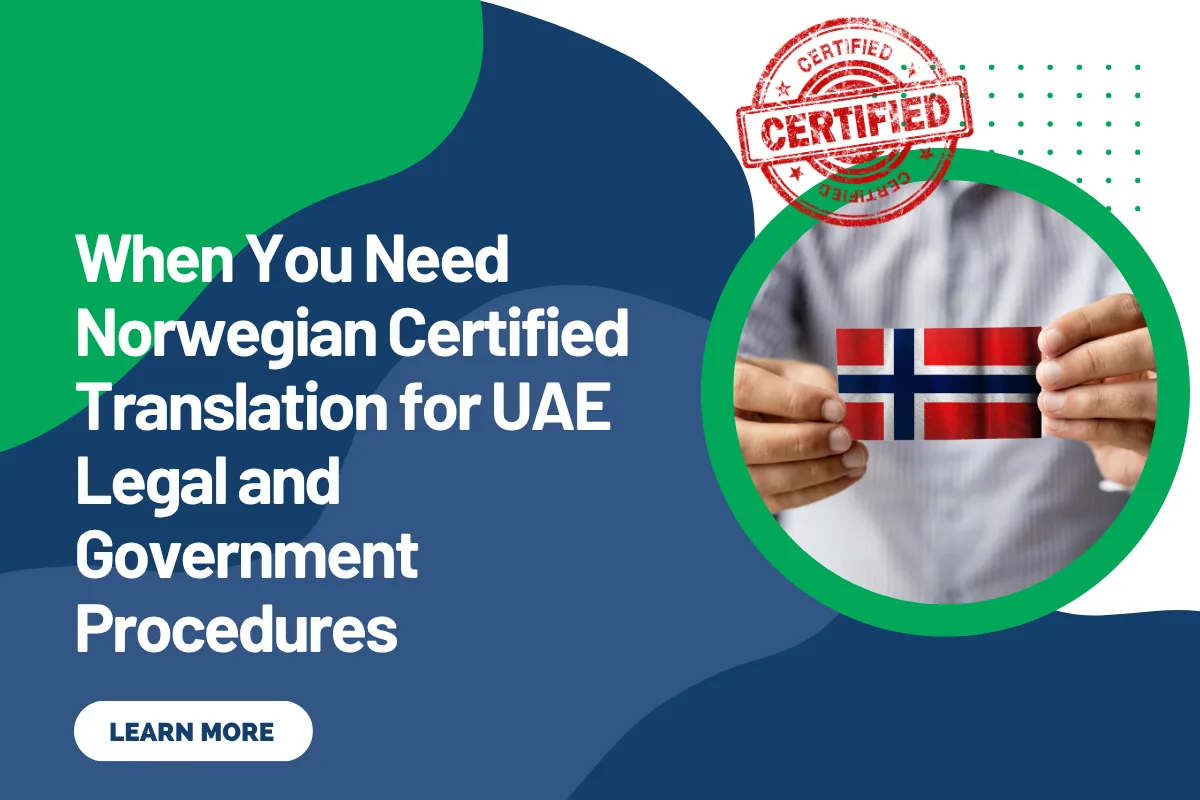
Paperwork in the UAE moves fast when your documents match what authorities expect. If you hold papers in Norwegian and need them for court, immigration, or government records, you may need a Norwegian certified translation. This guide explains when it is required, what it includes, and how to avoid delays.
Q Links Legal Translation Services works with legal, immigration, and notary workflows every day, so we see what gets approved and what gets sent back. If you want a neutral, step-by-step path, read on. For direct help with a file today, you can request Norwegian certified translation and align it with UAE procedures.
We will keep this plain and practical. You will learn the key triggers, the checks reviewers make, and a simple framework you can follow. Use it before you submit anything to a court, ministry, free zone, or a public notary.
Table of Contents
Quick Summary
In the UAE, authorities often ask for certified translations of foreign-language documents that support legal, immigration, or notary actions. This includes IDs, court papers, contracts, company records, and certificates. A proper file has translator details, a stamp, a statement of accuracy, and complete formatting.
Match the target authority’s rules first, then translate. Keep originals clear, names consistent, and stamps readable. Build a small file set that includes the source, the certified translation, and any legalization or notarization the authority lists. When in doubt, ask the receiving desk what they accept. This keeps your submission officially compliant and reduces back-and-forth.
When is a certified translation required in the UAE
Expect a certified translation when a Norwegian document supports a legal filing, a public record update, immigration processing, or a notarized act. Courts, registries, and government desks must read exactly what the source says, in Arabic or English, with zero gaps or edits.
For deeper background on rules and workflows, see the internal guide here: Complete Guide to Norwegian Certified Translation for Legal and Official Use. It walks through typical use cases and acceptance habits that shape how you prepare your file.
Plan ahead if your case involves time-sensitive steps like hearings, residence renewals, or company formations. Last-minute scans, unclear stamps, or mismatched names are the top reasons files bounce.
What counts as a certified translation in UAE practice
A proper certified file includes a translator’s declaration, signature, contact details, and a stamp. The translation must mirror the layout of the source so items like names, dates, tables, and seals sit where reviewers expect. Any unclear text is flagged with a note, not guessed. This discipline signals a certified translator’s attestation.
Pages should be numbered and complete. If the source has seals or handwritten notes, the translator notes them. Attach a copy of the source that matches the translation. Keep the pair together so reviewers can cross-check quickly.
If an authority asks for notarization or legalization, treat that as an extra step beyond certification. Do the translation first, then add the further steps listed by the receiving body.
Documents that often need certification
Typical files include court judgments, police records, power of attorney, contracts, company licenses, and academic records. Personal status items like birth, marriage, and divorce certificates also appear often. Immigration files rely on IDs, proof of funds, work letters, and education records.
Risk grows when a document has faded ink, missing pages, or name spellings that shift. Keep spellings consistent with passports and Emirates ID. Ask the translator to reflect diacritics or middle names exactly as they appear.
If your case touches both legal and immigration paths, prepare one clean set to serve both. Duplicates with small spelling differences invite questions.
Dubai-specific notes and search terms you may see
You might see requests labeled in many ways online. For example: Norwegian legal document translation Dubai, Norwegian immigration document translation Dubai, Norwegian certificate translation Dubai, and Norwegian document translation Dubai. All of these usually point to the same need: a certified file that meets a Dubai authority’s intake rules.
In practice, Dubai desks check that the translation is complete, formatted like the source, stamped, and easy to match to an application or case number. Keep the file clean, legible, and aligned with the cited rule on the form or checklist.
If the clerk or portal lists extra steps like notarization, add them only after the translation is in final shape. That sequence avoids rework and protects your submission integrity.
A simple 5-step framework to get it right
- Confirm acceptance rules. Ask the target authority what language, stamps, and attachments they require. Document the list. This anchors your compliance checklist.
- Prepare clear scans. Use full-page, high-resolution scans of every page, including the back if it has text or seals. Do not crop edges.
- Translate with certification. Request a stamped translation with a translator declaration, signature, and contact details. If you need more detail, see the complete guide on this topic to align your formatting and attachments.
- Attach and label. Pair source and translation, number pages, and label the bundle so reviewers can track it fast. This improves file traceability.
- Add notarization or legalization only if asked. Follow the receiving body’s order of steps. Keep receipts and reference numbers together for audit clarity.
Certified, notarized, legalized: how they differ
These terms get mixed up. Certified translation confirms the accuracy of language conversion. Notarization verifies signatures or declarations in front of a notary. Legalization or apostille makes a document acceptable across jurisdictions, if the authority requires it. Your case may need one, two, or all three. Match the request to avoid extra work and keep procedural alignment.
| Action | What it does | When used |
|---|---|---|
| Certified translation | Translator certifies accurate, complete translation | Most legal, immigration, and notary submissions |
| Notarization | Notary confirms a signature or sworn statement | Powers of attorney, declarations, some corporate filings |
| Legalization or apostille | Authority validates a document for cross-border use | When the receiving body lists it as a requirement |
Quality checks that prevent rework
Before you submit, do a name, date, and number sweep across the source and translation. Make sure formats match. Ask for a reviewer’s pass to catch small slips. This quick loop protects accuracy assurance and saves days later.
Check seals, footers, and annexes. If something is unclear in the source, ask the translator to mark it as illegible rather than fill the gap. That note shows care and keeps the file honest.
Common mistakes and how to avoid them
Top errors include cutting off pages in scans, leaving out the translator’s declaration, mixing languages in one file, and changing the order of pages. Another frequent issue is altered spellings that do not match IDs.
Fixes are simple: scan fully, include the declaration and stamp, keep the order, and match names to IDs. If a page is blank, label it as blank. If a seal is faint, note it as faint. This keeps your review readiness strong.
Timelines and planning
Set your internal deadline a few days before the official one. This gives you time for checks and any extra step like notarization. Ask the receiving body how long their review takes and plan around it.
Keep a copy set with the source, the certified translation, and any added steps. Store digital files with clear names so you can resend fast if asked. Good document control shortens every follow-up.
FAQs
- What is a certified translation in simple terms
It is a translation with a signed statement from the translator that says the work is accurate and complete, plus a stamp and contact details.
- Do I need Arabic or English for UAE submissions
Follow what the receiving authority lists. Many legal and government desks accept Arabic, some accept English. Ask first and match it.
- Will scanned copies be accepted
High-quality scans are often used for initial review, but some steps may require originals or notarized copies. Check the exact instruction.
- Can I edit formatting to make it look nicer
No. The translation should mirror the source layout. Do not add or remove content. Notes can mark unclear parts, but the text stays faithful.
- What if names are spelled differently across documents
Pick the version that matches your ID and keep it consistent. Add a short note if needed to explain a known variant.
- Does notarization replace certified translation
No. They serve different purposes. If the instruction lists both, you need a certified translation first, then notarization.
Conclusion
When your case depends on a Norwegian document, a well-prepared Norwegian certified translation keeps your file moving. Confirm what the authority accepts, prepare clear scans, use a proper certification format, and add notarization or legalization only if listed. This order saves time and avoids repeat visits.
If you want a neutral check, compare your bundle with the framework above. Keep the source and translation together, and label them clearly. For guidance that fits your exact situation, contact Q Links Legal Translation Services for expert assistance. With a steady process and tidy files, your submission stands on solid ground.