100% FREE CONSULTANCY

As your company scales in the UAE, the stakes rise on every document you issue, sign, or file. From bilingual employment contracts to cross‑border master service agreements, accurate legal translation in Dubai is a non‑negotiable part of corporate governance, risk management, and deal execution.
This cluster guide expands on the foundation set in the pillar article, The Ultimate Guide to Legal Translation Services, and focuses specifically on corporate scenarios HR policies, workforce documentation, and cross‑border contracts so your organization can act quickly and compliantly across mainland Dubai and free zones such as DIFC, JAFZA, and beyond. Complete overview: “The Ultimate Guide to Legal Translation Services.”
With operations stretching from Sheikh Zayed Rd and Trade Center to DIFC, Business Bay, Al Barsha, and JLT, you’ll often need certified Arabic translations for courts and government authorities, and precise English versions for boards, investors, and foreign counterparties. Q Links Legal Translation Services supports corporate legal teams with legal translation in Dubai that balances regulatory compliance, speed, and consistency delivered online or to your door.
Why Corporate Legal Translation in Dubai is Mission Critical
Dubai’s multilingual business environment demands clarity. Whether you’re onboarding employees, updating policies, or executing a cross border deal, legal translation in Dubai helps you:
- Comply with court, notary, and authority requirements when Arabic is mandatory.
- Ensure enforceability of contracts and HR documents under UAE law and, where relevant, DIFC rules.
- Mitigate disputes and delays by aligning bilingual documents word‑for‑word with the original intent.
- Protect brand reputation, employee rights, and shareholder interests through precise terminology and formatting.
- Accelerate cross‑border closings by providing counterparties with reliable, certified translations they can trust.
Regulatory Landscape: When Arabic is Mandatory and When English Suffices

Understanding the translation triggers in Dubai is essential to avoid rejection, resubmission, or enforcement gaps. Legal translation in Dubai typically requires Arabic for matters handled by mainland courts and authorities, while free zones like DIFC operate primarily in English. Still, many corporate workflows touch both spheres.
1) Mainland Dubai (onshore)
- Courts and Government Filings: The default language is Arabic. Court submissions, notarizations, and many official filings require Arabic or Arabic translations by Ministry of Justice (MOJ) licensed translators.
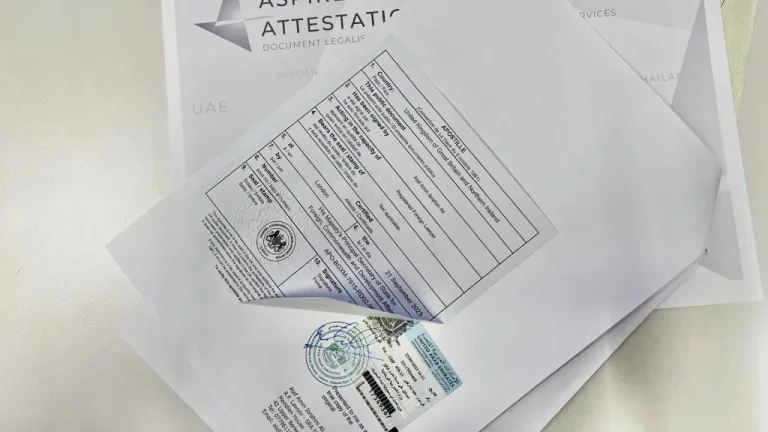
- Notarization and Attestation: If a document originates abroad, it often needs legalization (consular) and Ministry of Foreign Affairs (MOFA) attestation, then an Arabic legal translation in Dubai for use onshore.
- HR Documents: Bilingual employment contracts are common. Arabic may govern in the event of conflict, so translation accuracy matters.
2) DIFC (Dubai International Financial Centre)
- Working Language: English for courts and regulatory dealings within DIFC. Many corporate contracts are in English only.
- Interfacing with Mainland: If a DIFC entity interacts with mainland authorities or Dubai Courts (e.g., enforcement), Arabic translations by qualified legal translators may still be required.
3) Free Zones Beyond DIFC
- Free zones typically accept English. However, if a document must be recognized onshore (e.g., notary, litigation, immigration), an Arabic legal translation in Dubai is usually necessary.
Source:
[1] Regulation of labour relations. (n.d.). UAE Federal Decree‑Law No. 33 of 2021. Retrieved December 23, 2025, from http://uaelegislation.gov.ae/en/legislations/1541/download
[2] Rules. (n.d.). DIFC Courts. Retrieved December 23, 2025, from https://www.difccourts.ae/rules-decisions/rules
Quick Comparison: Translation Requirements Across Jurisdictions
| Scenario | Working Language | When Arabic Is Required | Who Should Translate | Typical Corporate Documents |
|---|---|---|---|---|
| Mainland Dubai filings/courts | Arabic | Always for court submissions; commonly for notary/authority filings | MOJ‑licensed legal translators | POAs, MoAs/AoAs, board resolutions, litigation bundles |
| DIFC courts/regulatory | English | If enforced or referenced onshore | Qualified legal translators with UAE expertise | Facility agreements, ISDAs, share purchase agreements |
| Cross‑border contracting | Varies | When performing/filing in UAE or counterparties require | Legal translators with sector expertise | MSAs, NDAs, distributor/agency contracts, corporate policies |
| HR onboarding across the UAE | Bilingual (Arabic/English) | Commonly for authorities and dispute resolution | Certified legal translators | Employment contracts, handbooks, code of conduct, benefits docs |
HR and Policy Translation: Building Enforceable, Employee Friendly Documentation
HR is where legal translation in Dubai meets daily operations. The right approach ensures your workforce understands rights and obligations, and your company meets UAE requirements.
1. Employment Contracts and Offer Letters
- Bilingual drafting: Prepare clear Arabic and English versions with explicit language‑of‑governance clauses.
- Scope and role clarity: Translate job titles, responsibilities, KPIs, and probation terms without ambiguity.
- Compensation and benefits: Ensure numerical accuracy, currency formatting (AED vs foreign), and eligibility criteria.
2. Policy Handbooks and Codes of Conduct
- Alignment with UAE Labour Law: Translate disciplinary procedures, leave policies, and working hours in line with applicable legislation and implementing regulations.
- Plain language versions: Alongside legally precise translations, offer employee‑friendly summaries to reduce misunderstandings.
- Localization: Adapt references to UAE public holidays, gratuity rules, and local reporting lines.
3. Disciplinary Actions and Termination
- Notice and cause: Translate notice letters, performance improvement plans, and termination papers with strict fidelity.
- Evidence packs: If disputes arise, bilingual evidence bundles may be required for authorities or courts.
4. Data Privacy and Confidentiality
- DIFC data protection (where applicable): For entities governed by DIFC data rules, translate privacy notices and cross‑border data transfer agreements consistently.
- NDAs and IP clauses: Legal translation in Dubai should protect know‑how, trade secrets, and invention assignments without loopholes.
Cross Border Contracts: Language and Enforcement Considerations
In cross‑border deals, the wrong wording can derail enforcement or introduce tax and compliance risks. Legal translation in Dubai supports deal integrity by addressing:
- Language clauses: Specify the governing language. If Arabic is required for local filings or enforcement, ensure certified Arabic versions exist and mirror the English original.
- Governing law and jurisdiction: Where contracts rely on DIFC courts or arbitration (e.g., DIAC), consider translation needs for filings or recognition in mainland courts.
- Defined terms and exhibits: Translate definitions and annexes with a locked glossary so obligations align across languages.
- Financial covenants and schedules: Numbers, decimal separators, and time zones should be standardized to prevent operational errors.
- Notarization and attestation: For use onshore, some documents must be legalized and then translated; sequence matters to avoid rework.
A Compliant Translation Workflow for Corporate Teams
Fast turnarounds don’t have to compromise accuracy. Below is a practical workflow Q Links Legal Translation Services uses for legal translation in Dubai across HR, policy, and contracting needs.
- Scoping and risk mapping: Define use case (court, authority, internal), deadlines, jurisdictions (mainland/DIFC), and certification needs.
- File prep and text extraction: Convert scans to editable text; preserve exhibits, seals, and formatting.
- Terminology and style setup: Build client‑approved glossaries for corporate entities, job titles, finance terms, and sector jargon.
- Translation with CAT tools: Use translation memory for consistency across policies, contracts, and templates.
- Legal and linguistic QA: Second‑linguist review plus legal eye to check definitions, cross‑references, and numbering.
- Certification and legalization: Where required, arrange certified translation, notarization, and MOFA attestation sequence.
- Secure delivery and version control: Provide bilingual PDFs and editable files, with version history for your deal room or HRIS.
- Post‑project updates: Maintain termbases so future amendments stay aligned.
Local Execution: Timelines and Logistics in Sheikh Zayed Rd, Trade Center, DIFC, Business Bay, Al Barsha, and JLT

Corporate legal work often runs on tight timelines. Q Links supports legal translation in Dubai with hybrid delivery models:
- Online intake and same‑day starts: Submit from your office in DIFC, Business Bay, or JLT; receive instant scoping.
- Door‑step delivery: Certified hard copies couriered to Trade Center, Sheikh Zayed Rd, Al Barsha, and surrounding areas.
- After‑hours coordination: For urgent hearings or signings, arrange pickup/return windows aligned to your schedule.
Pricing and Turnaround: What to Expect
Every project differs by complexity, certification needs, and design/formatting. The table below gives indicative ranges for legal translation in Dubai. Final quotes depend on file condition, domain complexity, and urgency.
| Document Type | Typical Length | Indicative Turnaround | Notes |
|---|---|---|---|
| Employment contract (bilingual) | 4–8 pages | 24–48 hours | Glossary setup for job titles/benefits |
| HR handbook/policy | 20–60 pages | 3–7 business days | Phased delivery by policy section |
| Share purchase agreement | 40–120 pages | 5–12 business days | Legal QA + certified copies as needed |
| Board resolution/POA | 1–3 pages | Same day–24 hours | Certification/attestation workflow on request |
Tip: For repeat corporate needs, set up a master service agreement and termbase. This reduces per‑page cost and shortens delivery times for legal translation in Dubai.
Quality, Confidentiality, and Technology Controls
Corporate stakeholders expect accuracy, privacy, and traceability. Q Links Legal Translation Services applies controls that align with legal operations best practices:
- Two‑step review: Translator + independent reviewer for legal and linguistic precision.
- Secure handling: NDAs, encrypted file exchange, and role‑based access on request.
- Terminology governance: Client‑approved glossaries and locked definitions reduce risk in HR and deal documents.
- Formatting fidelity: Mirrored pagination, clause numbering, tables, and exhibits to support side‑by‑side negotiation.
These safeguards help ensure your legal translation in Dubai stands up to regulatory scrutiny and cross‑functional use from legal and HR to finance and compliance.
Document by Document Guidance: What to Translate and Why
1. Corporate Governance
- Articles/Memorandum of Association (AoA/MoA)
- Board/shareholder resolutions
- Power of Attorney (POA) for signatories
Use certified Arabic translations for onshore notarization, filings, and court use. Keep synchronized English versions for foreign stakeholders.
2. HR and Employment
- Employment contracts, addenda, and transfer/secondment agreements
- Employee handbooks and policy suites
- Disciplinary notices and settlement agreements
Ensure bilingual alignment for clarity and enforceability across mainland and free‑zone contexts.
Commercial and Financial
- Master services/supply agreements, distribution/agency contracts
- Purchase orders, T&Cs, warranties, and guarantees
- Facility agreements, securities, and collateral documentation
Provide certified Arabic translations if the contract will be filed or enforced in mainland Dubai; keep exact English versions for cross‑border operations.
How Q Links Supports Corporate Legal Teams, HR, and Deal Desks
Q Links is a Dubai‑based language translation company specializing in legal, certified, and general translation with online and door‑step delivery. For corporate clients, our legal translation in Dubai covers:
- Certified translations for official use: Coordination of certified and attested copies for courts, notary, and authorities.
- Policy and HR documentation at scale: Handbooks, contracts, and training materials with maintained termbases.
- Cross border contracts: Complex agreements with consistent definitions, exhibits, and formatting.
- Multi location delivery: From DIFC and Business Bay to Al Barsha and JLT, with courier support around Sheikh Zayed Rd and Trade Center.
Whether you’re refreshing HR policies or preparing bilingual closing sets, Q Links Legal Translation Services helps you move faster with fewer risks so you can focus on outcomes, not paperwork.
FAQs: Legal Translation in Dubai for Corporate Teams
Within DIFC, English is the working language and often sufficient. However, if a document must be enforced or filed onshore (e.g., Dubai Courts), an Arabic legal translation in Dubai is generally required. Plan translations early to avoid delays.
For many onshore uses courts, notary, and certain authority submissions Arabic translations by MOJ‑licensed legal translators are required. Confirm the requirement for your specific filing before submission.
Use a bilingual template with a governing language clause, maintain a corporate glossary, and apply a two‑step legal/linguistic review. This approach keeps your legal translation in Dubai consistent and defensible.
For internal review, partial translation can work. For filings, notarization, or enforcement, authorities typically require full certified translations. When in doubt, request confirmation from the receiving body.
Generally, complete foreign legalization first (consular/MOFA), then perform the certified Arabic legal translation in Dubai for use onshore. Translating too early can lead to rework if legalization updates the document.
Conclusion: Move Faster with Compliant Legal Translation in Dubai
When policies, HR matters, and cross‑border contracts converge, precision becomes your competitive edge. By planning your legal translation in Dubai around jurisdictional triggers, certification needs, and airtight terminology, you reduce risk and unlock operational speed.
For expert support from DIFC based negotiations to mainland filings Q Links Legal Translation Services delivers certified, consistent results with online submission and door step delivery across Sheikh Zayed Rd, Trade Center, Business Bay, Al Barsha, and JLT. Ready to streamline your next set of documents? Contact Q Links for a quick, no‑obligation quote today. Complete overview: “The Ultimate Guide to Legal Translation Services.”