100% FREE CONSULTANCY

Financial institutions in Dubai operate at the intersection of local UAE regulations and global banking standards. From complex investment prospectuses to routine KYC forms and internal policies, every document must be crystal-clear in both Arabic and English to remain compliant, protect your institution, and build client trust. That is where specialized legal translation in Dubai for financial and banking documents becomes indispensable.
This cluster guide focuses on how banks, fintechs, investment firms, and corporate treasury teams in Dubai can manage high-stakes financial translations correctly. For a broader overview of legal translation types, regulations, and processes across all sectors, see: Complete overview: “The Ultimate Guide to Legal Translation Services.”
Drawing on the experience of Q Links Legal Translation Services, a Dubai-based provider of certified legal and general translations, this article explains what you need to know about translating KYC documentation, financial prospectuses, banking policies, and related materials across key business districts like Sheikh Zayed Rd, Trade Center, DIFC, Business Bay, Al Barsha, and JLT.
Why Financial Legal Translation in Dubai Is Uniquely Demanding
Dubai is a global financial hub, hosting local and international banks, free-zone entities, and cross-border investment vehicles. The financial ecosystem spans the DIFC common-law framework, UAE federal laws, and sector-specific regulations from the UAE Central Bank, ESCA, DFSA, and others. This complexity makes legal translation in Dubai for financial content particularly challenging.
Regulatory and Linguistic Complexity
Financial documents are not simply translated for understanding; they are translated for compliance. A single mistranslated clause in a loan agreement or a mistranscribed date in a KYC form can expose an institution to regulatory breaches, disputes, or reputational damage. Financial translators must therefore handle:
- Local regulations in Arabic and English
- International financial terminology
- Free-zone versus onshore legal structures
- Cross-border tax and reporting obligations
Arabic English Precision
Arabic is the official language of UAE federal legislation, while English dominates cross-border banking and investment. Accurate alignment between Arabic and English versions of contracts, disclosures, and policies is essential.
Q Links Legal Translation Services specializes in maintaining this alignment, ensuring that the Arabic text has identical legal and financial effect as the original English, and vice versa.
Core Categories of Financial Legal Translation in Dubai
Most banking and financial institutions in Dubai deal with recurring translation needs across several core document categories. Understanding them helps you structure your translation workflows and risk controls.
1. KYC and Onboarding Documentation
Know Your Customer (KYC) and customer due diligence (CDD) procedures are central to AML and counter-terrorist financing controls. These documents often require translation for both institutional review and regulatory inspection.
Typical KYC translation needs include:
- Passports, IDs, and residency visas
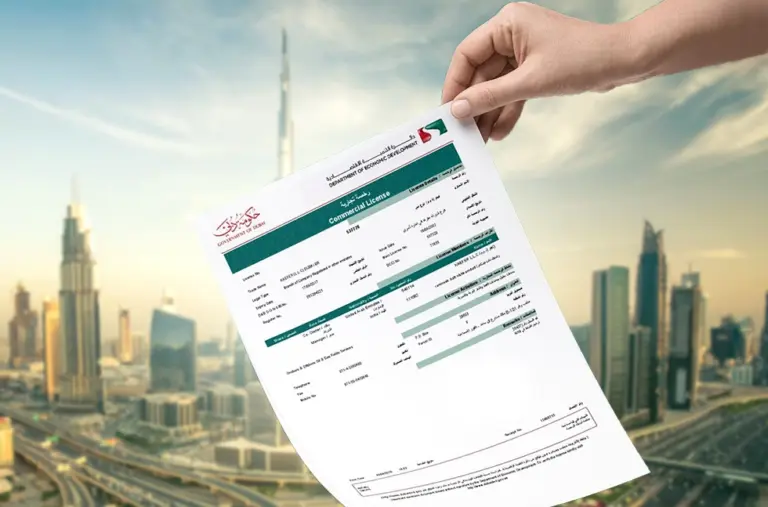
- Trade licenses and commercial registration documents
- Memorandum and Articles of Association
- Bank statements, salary certificates, credit reports
- Source-of-funds declarations and wealth statements
- Beneficial ownership forms and corporate structure charts
These documents often need certified translation, especially when issued in languages other than Arabic or English and submitted to UAE authorities or courts.
2. Prospectuses, Offering Memoranda, and Investor Documents
Prospectuses and offering memoranda are heavily regulated disclosure documents. When investment products target Arabic-speaking investors or must be filed with local regulators, professional legal translation is not optional; it is a compliance requirement.
Common investment-related documents that require precise translation include:
- Public and private offering prospectuses
- Fund prospectuses and KIIDs (Key Investor Information Documents)
- Sukuk and bond offering circulars
- Structured product term sheets and risk disclosure statements
- Subscription agreements and side letters
3. Banking Policies, Manuals, and Templates
Internal governance documents must be understood by multi-lingual teams across branches in Sheikh Zayed Rd, Trade Center, DIFC, Business Bay, Al Barsha, JLT, and beyond. Translated policies also form part of evidence in regulatory audits.
These may include:
- Credit risk policies and loan approval frameworks
- AML/CFT policies and procedures
- Sanctions screening and PEP-handling policies
- Customer complaint-handling procedures
- HR and compliance training manuals
- Standard form contracts and account opening packages
4. Transaction and Finance Documents
Corporate banking and project finance in Dubai often involve cross-border stakeholders. Transaction documents may need translation into Arabic for regulatory approvals or into English for foreign lenders and investors.
Typical transaction documents include:
- Facility agreements and security documents
- Intercreditor and subordination agreements
- Security agency and trustee agreements
- Islamic finance (Sharia-compliant) agreements
- Guarantees, comfort letters, and legal opinions
Translating KYC Documentation: Accuracy, Certification, and Compliance
KYC files are document-heavy and often multilingual. A client operating from Europe or Asia might submit corporate papers and personal IDs in several languages. Banks and financial institutions in Dubai must ensure those documents are clearly understandable and, where required, officially recognized in the UAE.
Which KYC Documents Usually Require Certified Translation?
While internal policy ultimately governs what your institution accepts, the following KYC documents frequently require certified legal translation in Dubai when submitted to banks or regulators:
- Passports and national IDs in non-Arabic/English languages
- Birth and marriage certificates for high-risk, PEP, or UBO checks
- Foreign corporate extracts, certificates of incumbency, and good standing certificates
- Company charters and shareholder resolutions
- Foreign court or notarial documents used for due diligence
Q Links Legal Translation Services, as a Dubai-based translation provider, issues certified translations which are widely accepted by banks and public authorities in the UAE.
Data Privacy and Confidentiality
KYC data is highly sensitive. When outsourcing translations, financial institutions must ensure that vendors handle personal and financial data securely. Best practices include:
- NDAs and strict confidentiality clauses with translation providers
- Secure file transfer (encrypted channels, secure portals)
- Access controls and document retention policies
- Use of in-house or vetted linguists for especially sensitive profiles
Q Links operates online and with door-step delivery options, enabling you to securely manage original documents from branches across Dubai while keeping a clear audit trail.
Practical Workflow Example: Corporate Client Onboarding
Consider a multinational opening a corporate account in DIFC while its parent company is based in Europe. A streamlined translation workflow might look like this:
- Document collection: Bank gathers corporate registry extracts, shareholder IDs, group structure charts, and AML certificates in the original languages.
- Translation scoping: Compliance team identifies which documents must be translated into Arabic or English to meet KYC and regulatory requirements.
- Secure submission: Files are uploaded via a secure online portal or collected for door-step service by Q Links in areas such as Business Bay or JLT.
- Certified translation: Legal translators render documents faithfully, with names, dates, and figures checked carefully.
- Quality and compliance review: Internal compliance team reviews translated documents, ensuring all required data points are clear.
- Filing and retention: Certified translations are stored alongside originals in the bank’s KYC repository and, where necessary, submitted to regulators.
Prospectus and Offering Document Translation: Managing Disclosure Risk
Prospectuses and offering memoranda underpin investor decision-making. Errors or ambiguities in translated versions can expose issuers, arrangers, and distributors to mis-selling claims and regulatory penalties.
Key Translation Challenges in Prospectuses
Prospectus translation requires a combination of financial literacy and legal precision. Common challenges include:
- Technical terminology: Yield curves, derivatives, hedging strategies, and structured payoffs require accurate equivalents in Arabic or English.
- Risk factor wording: Risk disclosures must not be diluted or exaggerated during translation; legal effect must remain identical.
- Complex sentence structures: Long legal-financial sentences must be rendered clearly without changing obligations or rights.
- Consistency across sections: Terms used in summaries, full texts, and annexes must match exactly.
Recommended Translation Process for Prospectuses
For banks and investment firms in Dubai, a robust prospectus translation workflow typically includes:
- Terminology alignment: Develop a bilingual glossary of product-specific terms, agreed among legal, product, and translation teams.
- Specialist translators: Use translators who understand both capital markets and local regulations.
- Legal review: Have in-house or external counsel review critical sections (risk factors, covenants, investor rights) in the translated version.
- Consistency checks: Deploy QA tools and manual cross-checks to ensure consistent use of defined terms.
- Version control: Track changes between drafts so that all language versions stay synchronized.
Q Links Legal Translation Services supports financial institutions across DIFC, Sheikh Zayed Rd, and JLT by assigning prospectus work to translators with financial-law experience and implementing rigorous multi-stage quality checks.
Translating Banking Policies, Manuals, and Templates
Internal governance documents guide day-to-day conduct, risk management, and customer interactions. Multilingual workforces in Dubai’s banking sector make high quality translations of these documents especially important.
Why Policy Translation Matters
- Regulatory expectation: Regulators may expect that key policies (e.g., AML, sanctions, conduct risk) be clearly understood by staff who interact with customers.
- Operational consistency: Staff in Al Barsha branch should apply the same rules as colleagues in a DIFC or Business Bay office, regardless of language.
- Evidence in disputes: Translated policies and manuals can be used as evidence in investigations or legal proceedings.
Best Practices for Policy Translation
When translating policies and manuals, consider the following:
- Plain language: Technical legal passages should be translated into clear, operationally useful language without losing legal meaning.
- Templates and standard clauses: Keep consistent translated versions of recurring clauses across documents (e.g., disclaimers, consent language).
- Employee-facing and customer-facing versions: Some policies require simplified customer summaries; translate both accurately.
- Periodic updates: Regulations and internal policies change; ensure translations are updated promptly.
Example: Translating an AML Policy
For an AML/CFT policy, translation should ensure:
- Defined terms (e.g., “suspicious transaction”, “ultimate beneficial owner”) match legal definitions in both languages.
- Procedural steps (e.g., escalations to MLRO, SAR filing timelines) are unambiguous.
- Sanctions references (UN, OFAC, EU lists) are correctly rendered without confusion.
By partnering with an experienced provider of legal translation in Dubai like Q Links, banks can standardize translations across branches and reduce operational risk.
Quality, Certification, and Workflow: How to Choose a Financial Translation Partner
Not all translation providers are equipped to handle financial and banking legal content. Selecting the right partner is a risk-control decision, not just a procurement choice.
Key Evaluation Criteria
| Criterion | What to look for |
|---|---|
| Regulatory familiarity | Experience with UAE banking, capital markets, and free-zone regulations; understanding of certified translation requirements. |
| Financial-law expertise | Translators with backgrounds in law, finance, or both; prior work on KYC, prospectuses, policies. |
| Certification capability | Ability to provide certified translations recognized by UAE authorities and courts. |
| Quality assurance | Multi-step review (translation, editing, proofreading), terminology databases, and consistency checks. |
| Security and confidentiality | Secure IT systems, NDAs, clear data-handling procedures, and staff vetting. |
| Service model | Online and physical delivery options, fast turnarounds for urgent regulatory or transaction deadlines. |
How Q Links Legal Translation Services fits in
Q Links is a Dubai-based company specializing in legal, certified, and general translation services. For financial and banking clients across Sheikh Zayed Rd, DIFC, Trade Center, Business Bay, Al Barsha, and JLT, Q Links offers:
- Certified document translation for KYC, court submissions, regulatory filings, and corporate documents
- Specialized financial translators with experience in capital markets, banking, and corporate transactions
- Flexible delivery options: secure online submission and door-step delivery of originals and certified copies
- Scalable support for large projects such as policy overhauls or multiple prospectus translations
Implementing a Robust Translation Workflow in Your Institution
To manage translation needs efficiently, banks and financial firms should implement internal procedures that define when and how translations are commissioned, reviewed, and stored.
Step-by-Step Approach
- Map your translation needs: List all document types KYC, contracts, policies, marketing disclosures across all business lines.
- Define risk tiers: Classify documents by risk (e.g., high: prospectuses, loan agreements; medium: policies; low: marketing materials).
- Assign translation rules: For each tier, specify whether you require certified translations, legal-review, or internal checks.
- Select preferred vendors: Appoint one or more trusted providers, like Q Links, and onboard them formally with NDAs and service-level agreements.
- Train staff: Educate relationship managers and compliance officers on how and when to request translations.
- Integrate technology: Use secure workflow tools or portals for document submission, status tracking, and archiving.
- Monitor quality: Periodically sample translated documents for accuracy and update glossaries where needed.
Localizing for Dubai’s Diverse Client Base
Beyond strict translation, some banks require localization adapting content for local expectations and regulatory context. Examples include:
- Explaining local deposit insurance schemes in investor materials
- Clarifying Sharia-compliant product features in Arabic and English
- Adapting complaint-handling information to UAE Consumer Protection rules
An experienced partner in legal translation in Dubai can help ensure localized content is both culturally appropriate and legally accurate.
FAQs on Financial and Banking Legal Translation in Dubai
Not always. Internal bank policies determine which documents require certification. As a rule of thumb, documents used in regulatory filings, court processes, or as core evidence of identity, ownership, or authority often require certified legal translation. Less critical supporting documents may be accepted with non-certified translations, but this should be guided by your risk appetite and compliance team.
Turnaround time depends on length, complexity, and whether a legal review is required. A short term sheet may take 1 to 2 business days, whereas a full prospectus can take one to several weeks. Early coordination with your translation provider, such as Q Links Legal Translation Services, helps align schedules with regulatory or issuance deadlines.
In principle, parties can agree which language version prevails. However, when dealing with UAE courts or regulators, an Arabic version may be required or given priority. It is crucial that translated versions are accurate so there is no divergence in meaning. Many institutions explicitly state in the contract which language version controls in case of conflict.
Q Links uses secure channels for receiving and delivering documents, signs NDAs where required, and restricts access to sensitive files to vetted translators and project managers. For highly confidential transactions, additional security and handling procedures can be agreed with the client in advance.
Yes. Because Q Links is based in Dubai and supports online submission and door-step delivery, it can handle urgent translation needs for deals, regulatory responses, or court deadlines, subject to reasonable volume and complexity limits. Advance notice and clear scopes help ensure feasible timelines.
Conclusion: Elevating Financial Compliance with Expert Legal Translation in Dubai
In Dubai’s fast-evolving financial sector, accurate and reliable legal translation in Dubai for KYC documents, prospectuses, policies, and transactional papers is a strategic necessity, not a peripheral task. Clear, compliant translations help you onboard clients efficiently, meet regulatory expectations, reduce legal risk, and build trust across Arabic and English-speaking stakeholders.
By partnering with a specialized provider like Q Links Legal Translation Services, financial institutions across Sheikh Zayed Rd, Trade Center, DIFC, Business Bay, Al Barsha, and JLT can implement robust translation workflows with certified outputs, secure handling, and sector-specific expertise.
If you are designing or revising your bank’s translation strategy, you may also benefit from a broader perspective on legal translation across practice areas, courts, and document types: Complete overview: “The Ultimate Guide to Legal Translation Services.”
For tailored support with financial and banking translations, from individual KYC files to large-scale policy and prospectus projects, you can contact Q Links for a consultation and structured proposal.