100% FREE CONSULTANCY
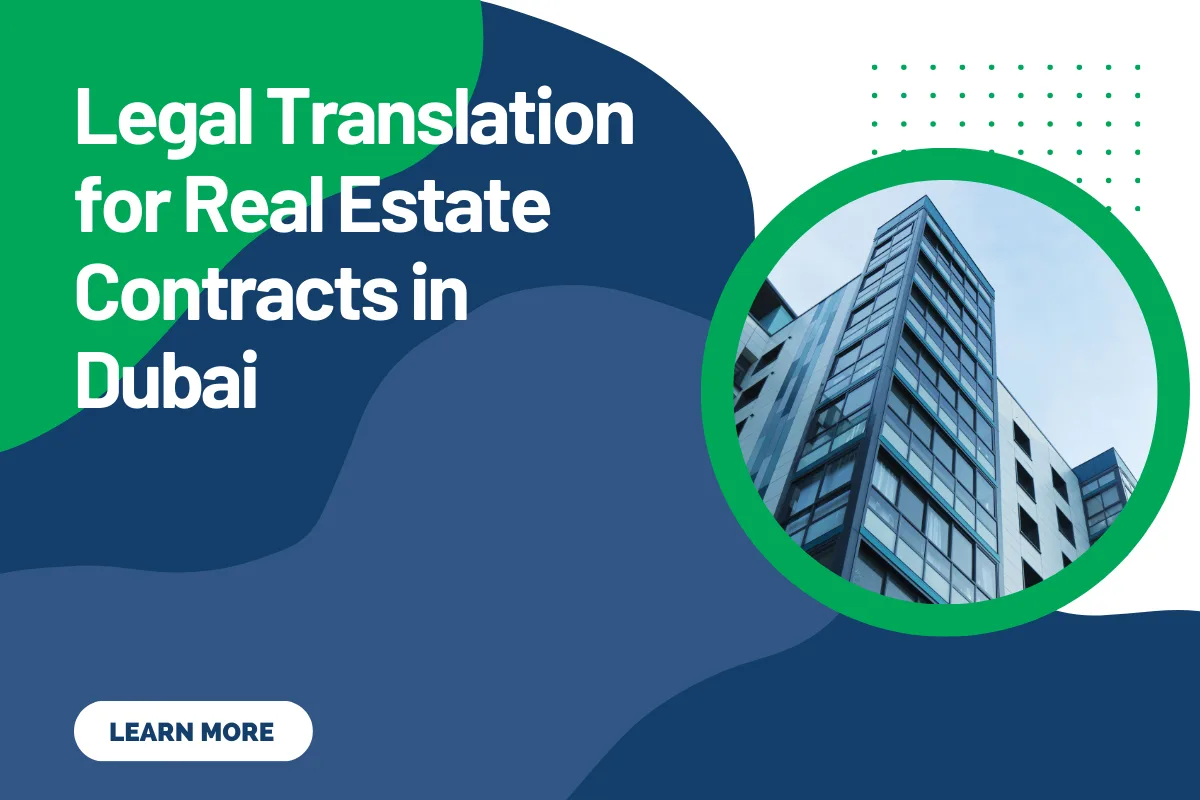
Real estate deals depend on precise documents, consistent terminology, and shared understanding between parties. When languages differ, legal translation in Dubai reduces the risk of ambiguity and supports smooth property transactions. Whether you are buying off-plan, registering a lease, or closing a complex sale, you need a process that prioritizes accuracy and clarity. With complex contracts, annexes, and financial schedules at stake, even small translation errors can cause delays or disputes. That is why working with a trusted partner like Q Links Legal Translation Services helps stakeholders protect intent, preserve meaning, and maintain confidence throughout negotiations and closing.
As a neutral third party, a specialist provider converts legal language faithfully and consistently while aligning with formatting, signatory, and certification expectations. This is especially important when cross-border parties, lenders, or government-related procedures are involved. The result is a usable, readable contract set that retains enforceable meaning across languages. For the property sector, it is less about word swapping and more about how definitions, obligations, and remedies carry over without gaps or contradictions.
Table of Contents
Quick Summary
This guide provides guidance on how real estate stakeholders can plan, request, and verify precise contract translations that are suitable for their intended purpose. It outlines which property documents typically require translation, what certified work entails, and how quality controls protect intent and enforceability.
You will also find a side-by-side comparison of translation approaches, a practical workflow, and risk-reduction tips. The focus is on clarity, confidentiality, and predictability for buyers, sellers, developers, and lenders.
Finally, it highlights how a specialized provider coordinates terminology, formatting, and certification so multilingual contract sets remain aligned throughout negotiations, execution, and after-sale obligations.
Why accuracy in property contracts determines outcomes
Property contracts are dense with definitions, conditions precedent, milestones, and remedies. Translation must preserve these elements so parties share the same commercial and legal intent. Errors can ripple into registration hurdles, lender questions, or contested obligations, so careful planning matters from the start.
Well-managed translations support clear signatures, aligned appendices, and clean version control. They also reinforce contract enforceability by keeping terminology consistent across all references, schedules, and notices. Clear language reduces later friction and promotes faster closings.
The Complete Guide to Legal Translation Dubai Certified Services Explained
Key real estate documents that commonly require translation
Not every file in a property deal needs translation, but several high-impact documents often do. Identifying them early helps teams schedule the right resources and avoid last-minute rushes. Typical examples include contracts that spell out obligations, timing, and payment flows.
- Sale and Purchase Agreement with definitions, milestones, and transfer conditions.
- A Memorandum of Understanding or Letter of Intent should be drafted to outline the essential terms of the deal prior to the main contract.
- The Tenancy Agreement pertains to properties that are leased, outlines the terms of renewal, and specifies the notice requirements.
- A Power of Attorney is used to authorize representatives for signings or registrations.
- Developer or HOA documents that outline community rules or building management obligations are also included.
- The documents may include financial schedules, escrow instructions, and lender correspondence, all of which require clarity.
- Notices, addenda, and side letters serve to modify or clarify primary agreements.
What certified legal translation means for property contracts
Property transactions often involve notarization, attestation, or official filings. In such contexts, stakeholders may request certified work so the translated content can be used for formal submissions. A provider clarifies the exact form of certification expected for the receiving party.
For property contracts, certified legal translation focuses on faithful rendering and document completeness. It aligns pagination, references, and annexes so translated and source versions can be cross-checked. It also pays close attention to signatures, seals, and formatting that support the identity of the document set.
Terminology consistency is central. Defined terms appear identically throughout, while dates, amounts, and clauses remain synchronized. This preserves traceability between language versions and supports future amendments or dispute resolution if needed.
Dubai context: acceptance, formatting, and official use
In Dubai, stakeholders operate within a structured ecosystem that includes developers, brokers, lenders, and public bodies. Expectations for document presentation, certification, and language use can vary by counterparty or procedure. Providers of official acceptance-oriented work help clarify what format is suitable for the intended use.
When selecting providers, many stakeholders compare options for quality assurance and confidentiality. Searching for legal translation services Dubai or legal translation Dubai can surface choices, yet selection criteria should focus on expertise with property contracts, version control discipline, and clarity about certification deliverables.
For complex closings or cross-border financing, a reliable legal translation company can coordinate with counsel and transaction managers to align expectations. The goal is a set of documents that is readable, consistent, and ready for the specific filing, signing, or review scenario in Dubai.
Quality controls that protect buyers, sellers, and developers
Quality is a process. It starts with a clear brief and ends with aligned deliverables. A structured approach prevents inconsistencies and ensures stakeholders can rely on translated texts without second-guessing intent or scope.
Core safeguards include translator specialization, glossary creation, and independent review. Central to this is quality assurance that checks terminology, definitions, cross-references, and numerals. File integrity is verified so annexes and exhibits match the contract body.
- Scope confirmation and risk flags are shared before work begins.
- Approved termbase for parties, properties, and defined terms.
- Dual review focused on legal meaning and document structure.
- Controlled updates when contracts change late in the process.
- Clear certification notes if required for formal submissions.
Certified vs general vs machine translation for property documents
Different approaches serve different purposes. The right choice depends on the audience, stakes, and intended use of the files. Below is a general comparison to guide scoping discussions with your provider.
| Approach | Best for | Strengths | Considerations |
|---|---|---|---|
| Certified legal translation | Official submissions, signings, lender or government-related use | Traceability, formatting alignment, formal certification | Requires defined process and specialized reviewers |
| General professional translation | Internal reviews, early negotiations, draft comprehension | Speed, readability, cost flexibility | May not be suitable for official filings |
| Machine translation with human editing | Initial understanding of non-binding materials | Fast throughput, baseline comprehension | Not recommended for enforceable contract sets |
Practical framework: end-to-end workflow for real estate contract translation
A clear workflow reduces rework and keeps all parties aligned. Below is a practical sequence many stakeholders follow to manage multi-document property deals from inquiry to delivery. It highlights ownership, timing checkpoints, and handoffs to minimize friction.
For foundational context on certified service components, also see descriptive partial-match text related to pillar topic. It complements this framework by explaining concepts used in multilingual legal workflows.
- Scoping and risk flags. Identify all files, annexes, and addenda. Call out potential pitfalls such as handwritten notes, stamps, or scanned quality issues. Establish a chain of custody for document versions.
- Terminology planning. Approve party names, property identifiers, and defined terms. Build a concise glossary that translators and reviewers will follow.
- Translation with context. Translators work with the agreed brief and glossary, keeping cross-references aligned and noting any ambiguities for client confirmation.
- Independent review. A second linguist or legally aware reviewer checks meaning, definitions, numerals, and clause integrity. Any discrepancies are resolved and logged.
- Formatting and certification. Ensure pagination, exhibits, and attachments mirror the source. Apply the agreed certification format where required.
- Final validation. Confirm signatory pages, seals, and references are complete. Share a change log if late-stage edits were incorporated.
- Handover and aftercare. Deliver final files securely, along with the glossary for future amendments. Maintain versioned archives for auditability.
Common challenges and how to avoid them
Property documents evolve quickly. Amendments, side letters, and last-minute changes can introduce conflicts. A well-governed process prevents mismatches and reduces downstream disputes or rework.
- Inconsistently defined terms. Solve with centralized terminology management and enforced reviewer checklists.
- Scanned copy quality. Request clearer originals or confirm ambiguous text in writing before translating.
- Misaligned pagination. Mirror the structure meticulously so signatures, exhibits, and cross-references match.
- Version drift. Use file naming conventions and a single source of truth to coordinate updates.
- Ambiguity in bilingual sets. State which language governs if required by the parties and keep both versions synchronized.
Scoping variables that influence effort
Translation planning benefits from early visibility into file count, annexes, and the presence of handwritten notes or stamps. The subject matter complexity and number of stakeholders also influence the review cycle.
Turnaround depends on document length, requested certification, and the depth of review. Communicating expectations upfront helps providers recommend the right resources. As a principle, link expected effort to scope and complexity instead of calendar targets alone.
When technical elements appear, such as engineering descriptions or specialized financial schedules, translators may coordinate with subject matter reviewers. This balances precision with clarity and keeps all parts of the contract set consistent.
How Q Links Legal Translation Services supports real estate transactions
Q Links Legal Translation Services provides certified legal translation, professional interpretation, and multilingual communication support for the Real Estate and Property sector. Our teams handle core contracts, annexes, and related correspondence with confidentiality and disciplined version control.
We coordinate draft-to-final workflows, from glossary creation through independent review and formatting. For signings, meetings, and negotiations, we provide on-site and remote interpretation so cross-lingual teams collaborate effectively. This end-to-end support helps stakeholders stay aligned from initial offers through post-closing obligations.
Across the UAE, our focus is reliability, compliance with applicable expectations, and readable deliverables that mirror the source. We engage with individuals, businesses, and government-related requirements, tailoring the approach to the intended use of each document set.
ROI considerations: reducing risk and accelerating closings
In property deals, clarity pays for itself. High-quality translations reduce follow-up questions, rework, and negotiation friction. They also help prevent misinterpretation of remedies, conditions, and deadlines that could otherwise slow progress.
Risk-aware planning enables smoother collaboration with counsel, lenders, and registries. Prioritizing consistency, traceability, and reviewer checklists strengthens risk mitigation and gives stakeholders confidence that both language versions carry the same meaning.
Teams that document their terminology and update workflows proactively are better prepared for amendments and after-sale obligations. The result is steadier governance over a contract’s full lifecycle, not just at the moment of signing.
Frequently asked questions
Core agreements such as sale and purchase contracts, tenancy agreements, powers of attorney, and addenda are common. Supporting schedules, notices, and correspondence may also be required depending on the transaction.
It generally includes faithful rendering, formatting alignment with the source, and a formal statement suitable for the intended use. The provider specifies the recipient’s expected certification format.
Use a shared glossary for parties, defined terms, and property identifiers. Require reviewers to verify definitions, cross-references, and numerals across all files.
Aligning structure, pagination, and annex references supports traceability. It makes both language versions easy to compare and reduces the risk of mismatches.
It can help with early understanding of non-binding materials. For enforceable contracts or filings, a professional human process with review is recommended.
Share the cleanest available originals, confirm the final scope, and flag any handwritten notes or stamps. Provide context and a preferred term list to guide the team.
Conclusion
Real estate contracts reward precision. By planning ahead, aligning terminology, and using a structured review process, stakeholders can rely on translations that protect intent and accelerate closings. If your transactions involve multilingual parties or filings, prioritizing legal translation in Dubai through a disciplined approach helps avoid friction and uncertainty.
For reliable support across contract sets, annexes, and related correspondence, partner with a specialist that treats quality and confidentiality as non-negotiable. Contact Q Links Legal Translation Services for expert assistance. The right process keeps documents synchronized across languages so agreements remain clear, readable, and usable throughout the property lifecycle.