100% FREE CONSULTANCY
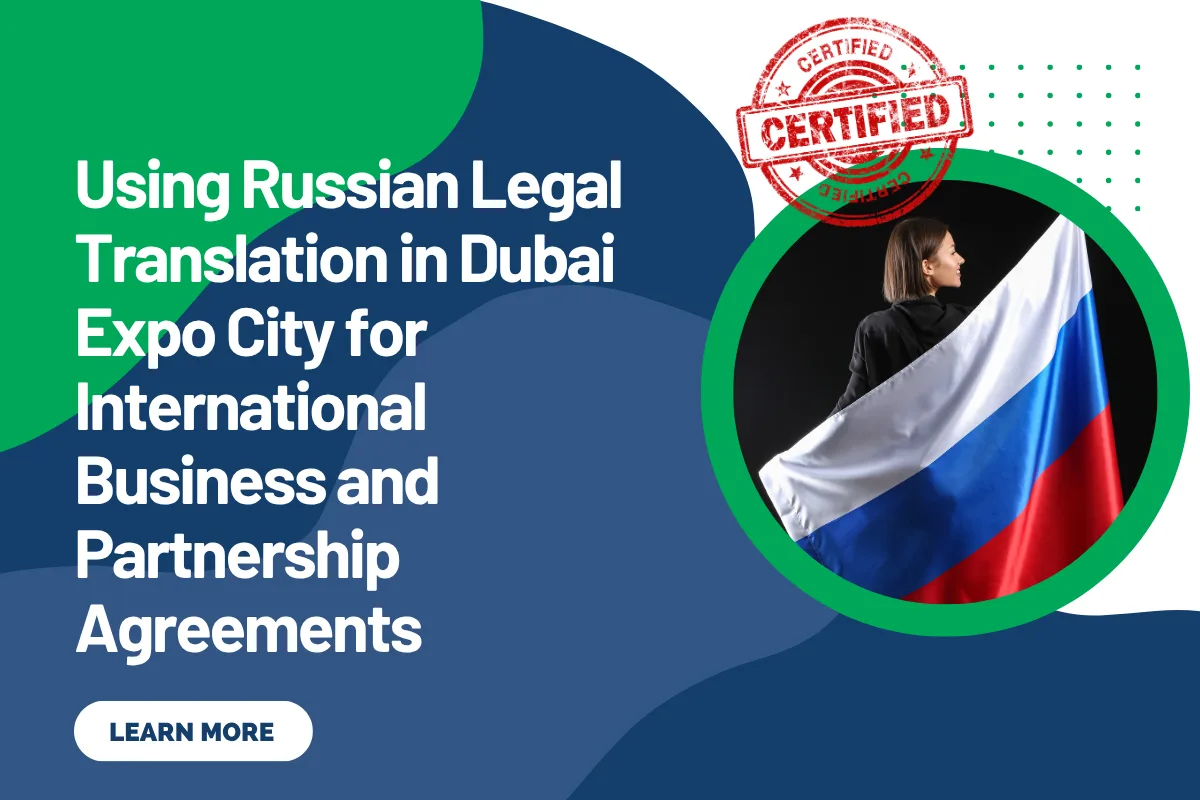
Partnerships at Dubai Expo City move fast. Teams from Corporate and Commercial groups sit across the table from International Trade and Export Businesses, and the paperwork flies. In this pace, you need translations that hold up in boardrooms and, if needed, in court. That is where Q Links Legal Translation Services fits the picture, helping you avoid gaps and misread clauses.
When stakes are high, small wording shifts can change risk and revenue. Getting Russian translation Dubai right means your contracts, addenda, and meeting notes match intent on both sides. It also means consistent terms across emails, drafts, and final signatures, so nothing slips through during sign-off.
For scope, accepted formats, and delivery options that many teams use in Expo City, see Russian translation Dubai. Use it as a reference while you plan workflows with in-house counsel and external advisors.
This article walks you through common documents, quality steps, meeting support, and comparison choices that keep Expo City deals on track. It also connects to the broader thinking behind Russian legal translation in Dubai, so your team can set checks before negotiations begin.
Table of Contents
Why accurate translation matters in Expo City partnership deals
In Expo City, many discussions end with a term sheet the same day. Then come drafts, board approvals, and filings. If a Russian clause is not an exact match in English or Arabic, one side may believe a different duty applies. That opens doors to disputes and delays you do not want.
You need certified legal translation for filings and any document that must be officially accepted. Early in this journey, align on purpose: will the text be used to negotiate, to sign, or to submit to an authority in the UAE or abroad? For a deeper foundation, read the Complete Guide to Russian Legal Translation for Individuals and Businesses in Dubai, which outlines common use cases and pitfalls.
Keep reminders simple: who will read it, what must be enforceable, and where it will be presented. With that clarity, your translator can pick terms that reflect intent, not just literal words.
Documents and clauses you will translate for Corporate and Commercial, and Trade
In Corporate and Commercial work, you will often see MOUs, NDAs, shareholder agreements, service contracts, and board resolutions. International Trade and Export Businesses bring purchase orders, supply agreements, agency or distribution deals, and customs letters to the table.
Clauses that cause trouble include indemnities, liability caps, jurisdiction, termination, IP assignment, and payment triggers. Make sure your translator flags any defined terms that ripple through these areas.
Ask for terminology management early. A mini glossary for defined terms, parties, and product names reduces rewrite cycles. It also helps when many translators touch the file across time zones.
Workflow and checkpoints that keep Expo City transactions clean
Start with a scoping note: who signs, who reads, deadline, and delivery format. Provide clean source files, not screenshots. Tell the translator the signing language and whether bilingual columns or separate language versions are needed.
Insert clear checks: translator draft, legal review, translator revision, and a final legal sign-off. That loop avoids errors and keeps timing steady. For records, store both the final signed text and the translation with an audit trail.
Build one round for quality assurance using checklists for names, dates, numbers, tables, and exhibits. If you must flip between languages during calls, agree on short labels for key terms so the team stays aligned.
Practical 7-step framework for Expo City partnership agreements
Use this repeatable sequence to reduce guesswork and save time across contract versions.
Step 1: Set intent. Say if the text is for negotiation, signing, or filing. That drives tone, precision, and layout. Include governing law and signing language in the brief.
Step 2: Scope the file. Confirm pages, annexes, exhibits, and expected updates. Mark any prior drafts or redlines.
Step 3: Lock terms. Approve a short glossary for parties, defined terms, and products. That speeds edits and avoids drift across drafts.
Step 4: Translate with risk mapping. Flag indemnities, liability caps, and triggers that may read narrowly or broadly in Russian versus English.
Step 5: Legal review. In-house or external counsel checks the translation for legal effect, not just wording. Capture decisions in comments, not chat threads.
Step 6: Sign-off package. Produce bilingual or parallel versions as agreed. Keep a revision log and final PDFs with dates and initials.
Step 7: Handover and archive. Deliver editable files and the glossary for future use in renewals or disputes. For deeper methods and examples, see the complete guide on this topic, which maps how translation choices affect enforceability.
Comparison: picking the right translation approach for Expo City negotiations
Not every file needs the same depth. Here is a quick view that helps Corporate and Commercial teams and Trade managers choose the right path before a deadline sneaks up.
| Approach | Use case | Pros | Risks | When to use |
|---|---|---|---|---|
| summary translation | Early deal review or board brief | Fast, low effort | May miss nuance in clauses | Initial screening of long drafts |
| Bilingual contract layout | Side-by-side negotiation | Easy clause comparison | Layout takes time to maintain | Active redlining, workshops |
| Certified full translation | Signing or official filing | Official acceptance | More time and cost | Final execution or submission |
Pick early and tell stakeholders. Changing the approach midstream often forces rework. When in doubt, ask legal which version will end up in the data room.
Interpreting for meetings and hybrid events in Expo City
Deals rarely close by email alone. You will meet in rooms and on video. Match the meeting format to the right support: consecutive interpreting for short sessions with pauses, or simultaneous for live events and panels.
Share agendas, materials, and names of speakers ahead of time. That lets interpreters prepare terms and acronyms. In trade settings, product demos often need images and part numbers, so send those too.
Agree on turn-taking and mute rules. Recordings help build a project glossary and capture decisions that guide later drafts.
Compliance, notarization, and record-keeping in the UAE
For documents that go to authorities, notaries, or courts, check formatting rules before you start. Some filings need Arabic, some allow bilingual, and some require stamps or specific sign-off lines. Plan early so formatting and seals do not delay the deal.
Quality control is not just style. It is process. According to International Organization for Standardization (2015), ISO 17100 outlines requirements for translation services, including resources, project management, and quality steps that reduce errors in legal work. ISO 17100:2015 Translation services
Keep a clean trail: final signed versions, certified copies, and the translator’s declaration if needed. That archive helps during renewals, audits, and any post-closing disputes.
Collaboration tips for legal teams and translators
Agree on one contact for each side. Route comments through that person to cut noise. Ask for a short list of must-keep terms and a list of nice-to-have phrasing. That helps trade managers and counsel pull in the same direction.
Confirm delivery logic. Use tracked changes for legal edits and comments for translation notes. Keep versions numbered. Avoid mixing chats and emails for decisions.
Schedule a quick kickoff. Ten minutes to align on contract terminology, layout, and reviewers can save hours of late edits. Keep it tight and practical.
Quick Summary
Dubai Expo City hosts fast-moving cross-border deals. This guide shows how to use Russian legal translation across Corporate and Commercial and Trade settings. You will see common documents, risk-heavy clauses, a 7-step framework, and a simple comparison table to choose the right depth. Learn meeting support, certifications, and archiving habits that prevent rework when deadlines arrive.
- What is the difference between a bilingual contract and a certified translation?
A bilingual contract shows both languages for negotiation. A certified translation is a full, officially accepted version used for signing or filing.
- Do I always need certified translation for Expo City deals?
No. Use summaries for early reviews and bilingual layouts for talks. Choose certified translation when you will sign or submit to an authority.
- Which clauses cause the most confusion across Russian and English?
Indemnity, limitation of liability, jurisdiction, termination, and IP assignment often shift meaning if terms are not aligned across languages.
- How do we speed up translation without losing quality?
Scope clearly, provide editable files, share a glossary, and set one review loop with legal. That keeps timing tight and errors low.
- Can interpreters join hybrid meetings at Expo City?
Yes. Book consecutive for short talks with pauses and simultaneous for panels. Share materials and names early so they can prepare.
- What file formats work best for legal translation?
Editable Word files and unlocked spreadsheets are best. Avoid images or scans unless you also provide text layers or originals.
- How should we archive translated contracts?
Save the signed source, the final translation, the glossary, and the change log. Keep dates, initials, and certification pages together.
- Where can I learn more about legal translation practices in Dubai?
Review internal policies and speak with counsel. For broader context, look at comprehensive guides that explain use cases in Dubai.
Contact Q Links Legal Translation Services for expert assistance.
Strong translation practice helps Expo City partnerships run cleanly. When you plan scopes, manage glossaries, and keep reviews tight, the final files match both sides’ intent. Treat Russian translation Dubai as a process, not a one-off task, and your Corporate and Commercial or Trade teams will save time, reduce risk, and keep deals moving.