100% FREE CONSULTANCY
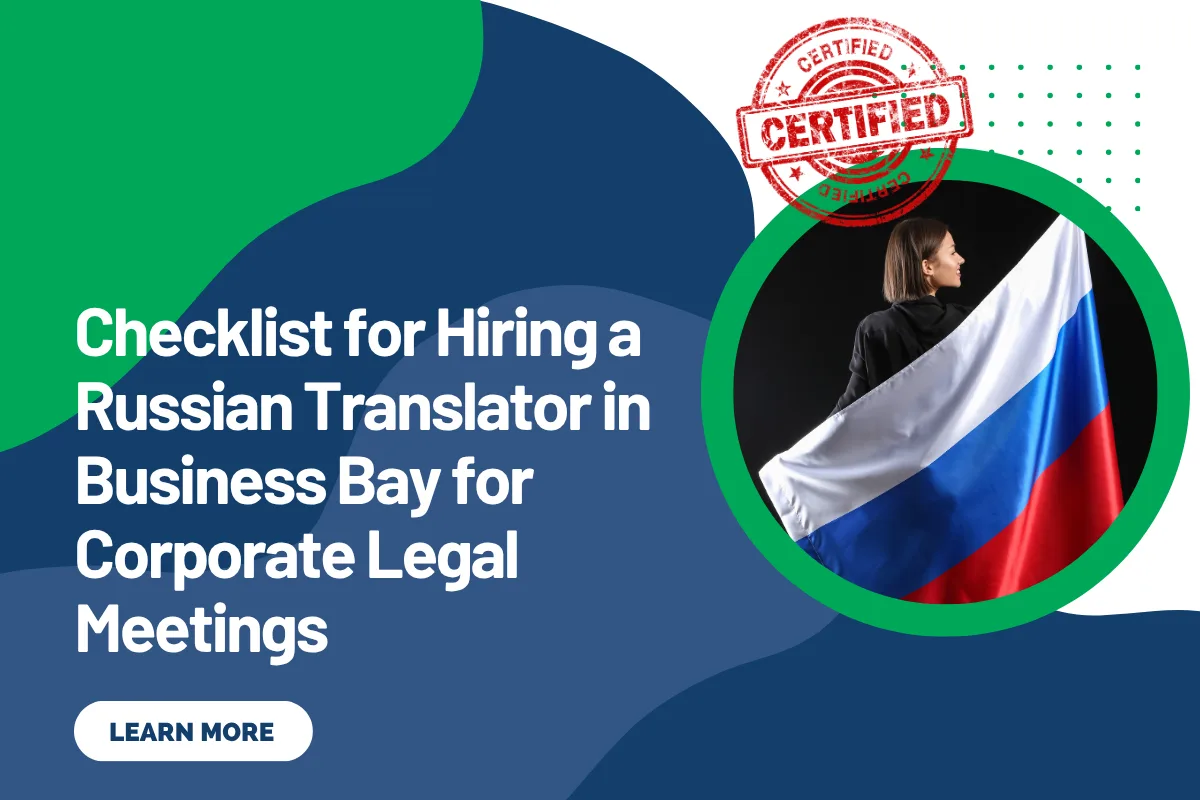
High-stakes corporate legal meetings call for precise language and calm control. When Russian and English meet across the table, you need a clear plan. Your first move is to secure a Russian translator in Dubai who can handle legal terms, tight timelines, and tough rooms without slipping.
Q Links Legal Translation Services supports boards, legal teams, and company formation units across the UAE. If you are arranging a meeting and want a practical starting point, see a trusted option for a Russian translator in Dubai. This article stays educational and gives you a field-tested checklist for corporate counsel, commercial leads, and PRO coordinators.
Table of Contents
Quick Summary
This checklist helps you choose the right interpreter for corporate legal meetings. It covers role clarity, due diligence, skills, compliance, logistics, and live meeting flow. Define the scope, confirm experience, and test fit early. Choose mode wisely: on-site, remote, or hybrid. Plan tech, channels, and documents. In the room, use a simple speaking rhythm and allow note-taking. After the session, confirm minutes and action items. Pair this with your internal legal playbook and keep terminology tight. Even a short pre-brief saves time and reduces risk. If the session involves contract drafting or board approvals, consider consecutive interpreting to keep the legal record clean.
Why this checklist matters for corporate legal meetings
Corporate counsel and commercial managers face real risk when meaning slips. Clear legal interpretation prevents disputes, protects intent, and supports enforceable decisions. For deeper background on legal translation standards that affect meeting records, see the Complete Guide to Russian Legal Translation for Individuals and Businesses in Dubai.
This checklist aligns with needs in Corporate and Commercial work, and also helps Business Setup and PRO teams when partners or investors use Russian. It keeps the session efficient, private, and traceable without turning it into a lecture.
Interpreter roles and modes you may need
Pick the right mode for your legal purpose. Use simultaneous interpreting when several people must follow live without pauses, like complex presentations. Use consecutive when precision matters and you want a natural break after each point.
For corporate approvals, board votes, and contract markups, consecutive often fits best. For investor roadshows or time-limited briefings, simultaneous can save minutes and keep momentum.
In Business Setup and PRO tasks such as notarization guidance or license terms, a calm, paced format works better than speed. Match the mode to the legal outcome you need to document.
Due diligence before booking
Do short but focused checks. Ask for legal meeting references, not just conference gigs. Confirm past work in corporate and commercial settings. Run simple conflict of interest checks so the interpreter does not serve competing parties in the same matter.
Request a brief audio sample or join a 10-minute test call. Share two or three key legal terms and see how they explain them. Ask how they handle sensitive names and confidential exhibits.
Confirm availability for prep and a short debrief. The right fit will suggest a glossary and ask for agenda, roles, and draft documents early.
Skills and qualifications that count
In legal contexts you want proven accuracy. Look for strong command of corporate law terms, company formation language, and board governance phrasing. Experience with redlines and negotiated clauses helps a lot.
Ask if they handle both interpreting and certified translation for follow-up documents, if needed. While the meeting may not demand a stamped translation, having the same professional align terms across spoken and written work keeps consistency.
Check soft skills too: composure, turn-taking control, and ethical stance. These matter when a heated clause debate starts.
Confidentiality and compliance essentials
Legal meetings require strong privacy. Sign a simple, clear non-disclosure agreement. Confirm data handling rules for emails, cloud files, and chat logs. Ask how they store or delete notes.
If you expect minutes or a summary, agree on the format and scope. Clarify who can access recordings, if any. Keep consent forms simple and approved by your counsel.
If your session feeds into later filings or certified drafts, note that early wording choices shape the final text. Consistency with Russian legal translation best practices in Dubai will save time later.
Step-by-step meeting workflow for Business Bay boardrooms
Use this practical flow. It reduces friction and keeps counsel in charge. For background on wording choices that impact contracts and affidavits, pair this with the complete guide on this topic.
- Pre-briefing: Share agenda, names, roles, and decision points. Mark sensitive sections.
- Glossary setup: Provide key terms, party names, and clause labels. Align on preferred translations.
- Mode choice: Confirm consecutive for markups and votes, simultaneous for long briefings.
- Channel test: Check headsets, mics, and screen shares. Confirm backup options.
- Speaking rhythm: Use short, complete thoughts. Pause for the interpreter to render meaning cleanly.
- Clarification rule: If a term is unclear, stop fast and fix it once. Note the final phrasing.
- Note-taking: Allow interpreter notes and discreet term checks. Keep phones off the table.
- Wrap-up: Re-state decisions, dates, and action items. Confirm the wording of any commitments.
Tools, logistics, and venue checks in Business Bay
Confirm building access, meeting room setup, and device rules. Some towers require visitor passes and early arrival. Test the audio path and make sure the interpreter seat has a clean line of sight.
For remote or hybrid, secure the remote interpreting platform first. Set who controls mics, who shares screens, and where chat questions go. Always keep a dial-in fallback.
Share materials in advance as locked PDFs or protected slides. Label files clearly so everyone opens the right version in the room.
On-site vs remote vs hybrid: which fits your meeting
Your legal goal should pick the mode. Tight votes and contract edits favor in-room control. Short briefings or multi-city updates can work well online. Complex boards may choose hybrid interpreting to keep key parties present while others join remotely.
| Mode | Best for | Pros | Limits |
|---|---|---|---|
| On-site | Board approvals, clause-by-clause edits | Highest control, clear nonverbal cues | Room and travel constraints |
| Remote | Briefings, status updates | Flexible, quick to schedule | Audio risk, screen fatigue |
| Hybrid | Mixed attendance with key signers in-room | Balances access and control | More moving parts to manage |
Red flags you should not ignore
Stay alert to signs that could derail your meeting or weaken the record. Note these early and adjust fast.
- Vague answers about legal experience or reference checks
- No interest in a glossary or agenda
- Refusal to sign NDA or unclear data handling
- Over-talking parties instead of managing turn-taking
- Inconsistent terms or lack of back-translation when asked to verify meaning
- Poor audio setup and no backup plan
How this checklist supports your teams
Corporate and Commercial leaders need clean outcomes: aligned terms, traceable decisions, and a record everyone trusts. This checklist helps legal and business leads work in sync with the interpreter, not around them.
For Business Setup and PRO work, the process reduces rework at notaries or government counters. It also ties nicely to Russian legal translation practices in Dubai, so meeting language flows into documents smoothly.
Keep it simple: share context, slow the pace, confirm key wording. That is how meetings hold up under pressure later.
FAQs
- What is the difference between consecutive and simultaneous interpreting in legal meetings?
Consecutive happens in short turns with pauses. It suits contract edits and board votes. Simultaneous runs without pauses, good for briefings. Pick based on the decision you must record.
- How early should we brief the interpreter?
Share agenda and key documents 48 to 72 hours before the meeting when possible. Even a short pre-brief improves accuracy and reduces mid-meeting stops.
- Can the interpreter also provide written translations after the meeting?
Yes, many can. Agree on scope early. Keep terminology consistent with your meeting glossary to avoid rework in the final paperwork.
- What should we include in our NDA with the interpreter?
Cover document handling, storage, deletion, and who may access recordings or notes. Keep the terms simple and approved by your legal team.
- How do we manage remote participants during legal edits?
Assign a single mic controller. Use clear hand signals or chat for turns. Confirm the final clause wording aloud before moving on.
- Do we need a backup plan for audio or connectivity?
Yes. Always keep a dial-in number or secondary platform. Test headsets, mics, and screen share once before the session starts.
- How do we check legal terminology fit before the meeting?
Send a short term list and ask for preferred Russian equivalents. Do a 10-minute test call to confirm tone, phrasing, and any tricky names.
Conclusion
Corporate legal meetings reward clear roles, steady rhythm, and a reliable language partner. Use this checklist to set scope, pick the mode, and protect the record. When you plan early and choose the right Russian translator in Dubai, the room stays focused on decisions, not definitions.
Keep a glossary, test tech, and lock privacy steps before you sit down. If your session feeds into certified drafts or filings, align terms from the start so written work matches what was said. Contact Q Links Legal Translation Services for expert assistance. With the right setup, your meeting flows, your terms hold, and your outcomes stand.