100% FREE CONSULTANCY
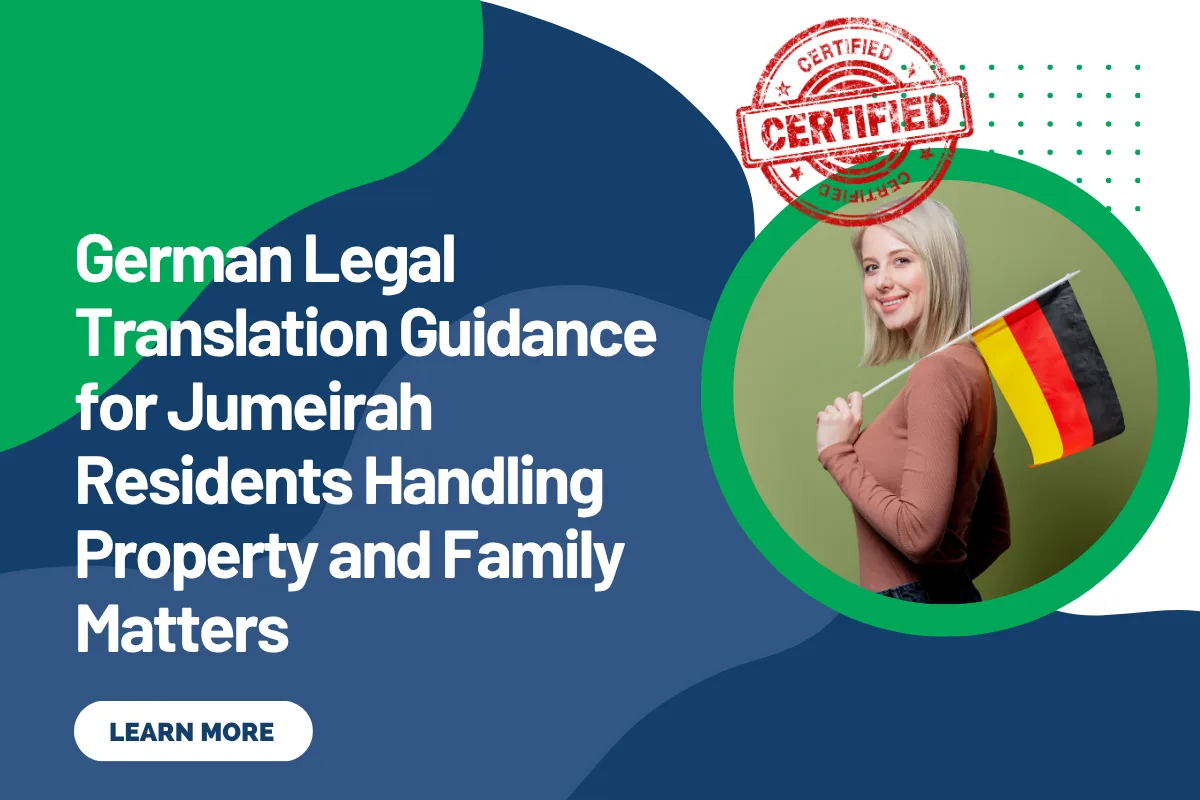
Living in Jumeirah comes with its own rhythm and paperwork. When property or family life crosses with German documents, the rules can feel strict and a bit odd. This guide walks you through what to prepare, how to avoid delays, and who needs what. We share simple steps so you can handle it with less stress.
Q Links Legal Translation Services works daily with neighborhood cases like property sales, tenancy renewals, custody filings, and inheritance files tied to Germany. We cover the basics of German legal translation Dubai for Jumeirah residents, from standards and stamps to timelines and record-keeping.
For detailed requirements or when you need a project handled end to end, many residents use German legal translation Dubai support to ensure documents are accepted the first time.
Table of Contents
Quick Summary
If you live in Jumeirah and manage property or family matters linked to Germany, you will likely need official translations into Arabic or English. This guide explains which documents are common, how certified work differs from a simple translation, and how to move through each step cleanly. We also map typical risks like spelling mismatches, missing stamps, and unclear dates. You will learn how to prep scans, choose direction (German to Arabic or to English), and check key terms. The framework section gives a short path from intake to delivery. Keep copies, track reference numbers, and store templates for future use. When in doubt about formal standards, refer to the broader guidance on German legal translation for UAE residents and businesses.
Key Documents Jumeirah Residents Often Translate
For neighborhood needs, the most common sets are property files, family status records, and bank or court letters. If you want deeper context on rules and process, see the Comprehensive Guide to German Legal Translation for UAE Residents and Businesses for a wider view.
Property files can include sale agreements, title excerpts, and ownership confirmations. Family files often include marriage, birth, and divorce records, plus custody or guardianship orders. Bank or court letters cover proof of funds, debt notes, or rulings tied to maintenance or inheritance.
In all these, you need an official legal translation that follows local acceptance rules. For routine records, well-prepared copies and clear, scannable PDFs make a big difference.
What Makes a Translation Official in Dubai
Not all translations count the same. A certified translation includes a translator’s declaration, signature, and stamp that confirm accuracy. Some authorities may also ask for notarization or further attestation steps, depending on use.
Acceptance requirements vary by the receiving office. Before you start, ask which language is required, and whether copies need to be notarized or stamped. Keep names, dates, and passport numbers consistent with your IDs and property records.
When unsure, many Jumeirah residents check broader guidance on German legal translation for UAE residents and businesses to confirm the right path before booking appointments or paying fees.
Property Matters: Deeds, POAs, and Tenancy
Property documents often move in sets. A sale or transfer may need the sale agreement, a title excerpt, identity pages, and a power of attorney if someone signs on your behalf. Tenancy renewals or disputes can require lease terms and notice letters translated into the correct language.
| Use Case | Direction | Typical Requester | Key Requirement | Pitfall to Avoid |
|---|---|---|---|---|
| Title or sale file | German to Arabic | Local authority or registrar | Certified translator stamp | Name spelling mismatch |
| Bank mortgage pack | German to English | Bank or lender | Full document set | Missing annexes |
| POA for agent | German to Arabic | Notary or counterparty | Clear powers listed | Ambiguous terms |
Confirm the exact list the receiving office needs, not just one file. Missing annexes or unclear appendices cause most delays. Keep every page, stamp, and note in order from the start.
Family Matters: Marriage, Birth, Custody, Divorce
Family records touch identity and status. A marriage certificate, birth certificate, or divorce decree often needs official translation for visas, inheritance filings, or school admissions. Custody and guardianship documents may also need careful rendering of terms.
Check if the office wants Arabic only or will accept English. Ask if they need a legal translator’s stamp and whether copies must be notarized. Keep every line of names, places, and dates exact to your passports and residency pages.
These translations must be precise. Even small differences in family names can trigger rejections or repeat visits.
Practical Framework: Step-by-Step Workflow for Jumeirah Residents
This short path helps you plan cleanly and avoid double work. It also ties into the complete guide on this topic if you want extra detail.
- Intake and scoping: List every document, page count, target language, and receiving office. Note any stamps or notarization needed.
- File prep: Scan clean copies. Name files clearly: 01_Sale_Agreement_DE.pdf, 02_Title_Excerpts_DE.pdf. Keep identity pages ready.
- Terminology: Provide spellings for names, addresses, and places. Share past approved translations if available.
- Translation: Keep format close to the original with correct headers and tables. Tag unclear parts for queries.
- Quality assurance: Do a second-linguist review for figures, names, and dates. Confirm page order matches the source.
- Certification and delivery: Obtain the translator’s stamp and any required confirmations. Deliver PDFs and, if needed, printed sets.
- Record-keeping: Store final files, reference numbers, and a checklist for the next renewal or filing.
Terminology, Formatting, and Quality Checks
Legal meaning hinges on exact words. Manage terminology management with a simple glossary for names, property terms, and family law concepts. Align numbers, parcel IDs, and account references across all files.
Mirroring the source layout helps. Keep headings, tables, and footnotes clear so reviewers can compare page by page. For complex files, ask for a brief context note stating what the file will be used for.
Run one last pass for dates. Use the same date style throughout, and confirm time zones where contracts list delivery or notice periods.
Common Mistakes, Timing, and Confidentiality
Small errors create big delays. The most common is mismatched names across passports, title files, and certificates. The next is missing annexes or unnumbered pages. Also watch for stray typos in parcel IDs or bank IBANs.
Plan time for queries and for certification. Urgent cases are possible, but build in a cushion, especially when other parties need to review. Keep documents secure. Ask for encrypted transfer and safe storage if handling sensitive family or property data.
For many, this approach mirrors the broader advice often shared for German legal translation for UAE residents and businesses, but tuned for Jumeirah’s day-to-day needs.
Handling Immigration and Certificates in Dubai
If you are applying for visas or status changes, German document translation Dubai should follow the same care: accurate names, clean formatting, and the correct stamp. This applies to bank letters, police clearance notes, and residence records used in family or property steps.
For status or school admissions, you may also need German certificate translation Dubai for academic records or civil status files. For visa submissions tied to spouses or dependents, plan for German immigration document translation Dubai with clear relationships and dates aligned with passports or residence permits.
Before you book appointments, ask which language is mandatory, whether copies are accepted, and if print sets are needed. That small step can save a lot of back and forth.
FAQs for Jumeirah property and family translations
- Which language should I choose, Arabic or English?
Ask the receiving office first. Some insist on Arabic, while banks or private parties may accept English. Choose the language the reviewer will use.
- Do I need originals or will scans work?
High-quality scans usually work for translation. For submission, follow the office rule. Some require print sets or to see originals during review.
- What makes a translation officially accepted?
It typically needs a legal translator’s stamp and declaration. In some cases, notarization or further confirmations are requested by the office.
- How do I avoid name mismatches?
Share exact spellings from passports and IDs upfront. Keep one master glossary for all documents and stick to it.
- Can I reuse older translations?
Yes, if the content and details have not changed. If new pages or annexes were added, get those translated and aligned.
- How long does the process take?
It depends on page count, queries, and certification steps. Simple files can be quick. Complex bundles take longer. Start early when possible.
- Will authorities accept English for property matters?
Some do, but many expect Arabic. Confirm with the office or counterparty before you proceed to avoid rework.
- What if a document has handwritten notes?
Provide the best scan you can and note unclear handwriting. The translator will flag uncertain parts for confirmation.
Conclusion
Jumeirah residents often juggle German files for property or family life, and the process rewards neat steps and patience. Start with the right language, list every document, and keep names, dates, and IDs aligned. Use certified work, ask about extra stamps, and track annexes and page counts from the start.
If you plan ahead, most tasks move smoothly. For ongoing needs or complex bundles, keep a simple checklist, a glossary, and final stamped PDFs stored safely. When you need clarity on standards or confirmation about what the local office will accept, seek guidance early. Contact Q Links Legal Translation Services for expert assistance. For everyday and complex cases alike, this straightforward approach helps you manage German legal translation Dubai without last-minute surprises.