100% FREE CONSULTANCY
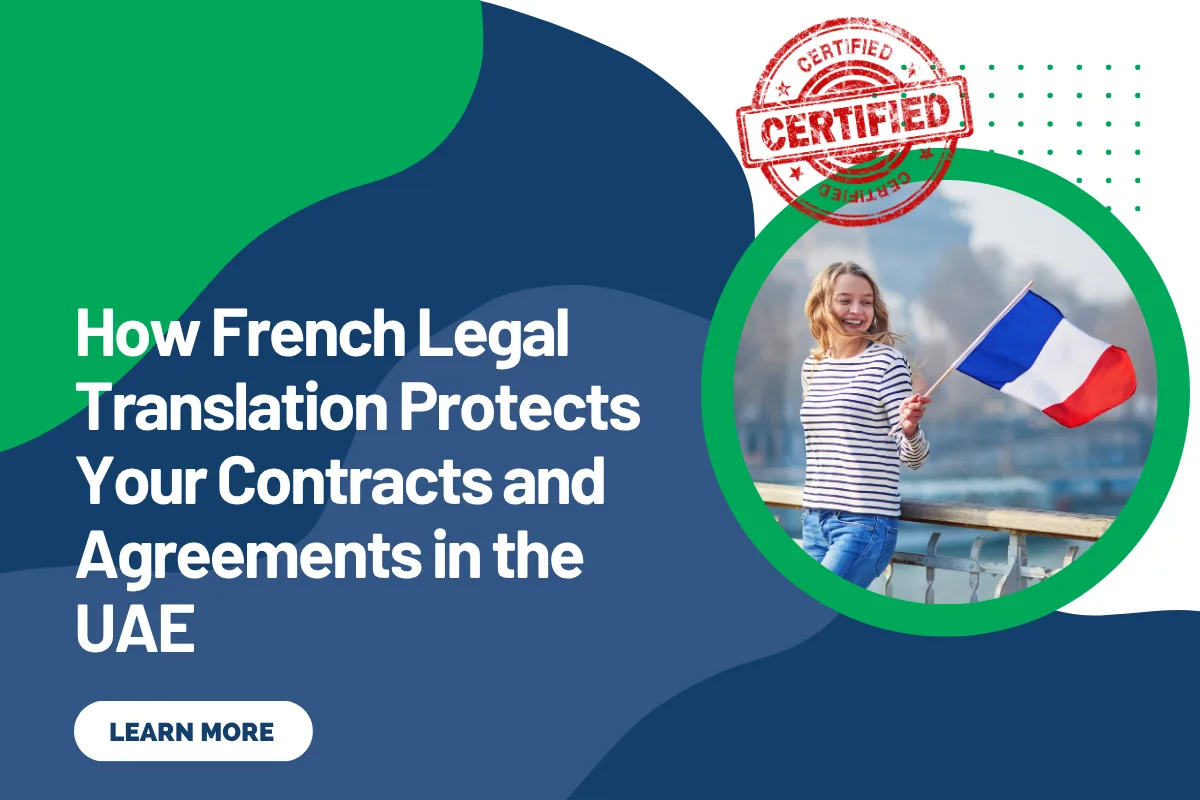
Contracts work only when every word lands exactly where it should. In the UAE, French and Arabic documents often sit side by side, and any mismatch can cause delay, disputes, or losses. That is why French legal translation is not just a language task. It is risk control and contract insurance in one.
At Q Links Legal Translation Services, we see how a single term in a bilingual contract can shift meaning. A harmless-looking clause might change a payment duty or a notice period. With the right approach, your agreements hold up under pressure, across courts, regulators, and cross-border partners.
This article shows how careful process, clear terminology, and smart checks protect your contracts. It builds on the broader guidance covered in the complete guide to French legal translation in the UAE, and turns it into steps you can put to work right away.
Table of Contents
Quick Summary
French legal translation shields your contracts by keeping intent, scope, and obligations aligned across languages. The goal is not just accuracy, but consistency with UAE practice, enforceability, and clean audit trails. You reduce disputes by tightening terms, validating numbers and dates, and checking defined terms and boilerplate.
Focus on the clauses that break deals: indemnities, warranties, limitation of liability, governing law and dispute resolution, and payment triggers. Build a simple workflow with bilingual glossaries, two-step reviews, and sign-off from counsel. Use certified versions when authorities require them, and keep a version log so every stakeholder reads the same deal.
Why Contracts Fail Without Precise Terminology
Small wording gaps turn into big problems. A French phrase that feels general can hide a narrow legal scope in Arabic, or the other way around. That gap becomes contract ambiguity, and ambiguity invites arguments, not performance.
Early alignment on defined terms fixes most of this. If “Force Majeure,” “Material Breach,” or “Affiliate” differ across languages, you risk different outcomes at enforcement. For deeper background on concepts, see the Complete Guide to French Legal Translation for UAE Residents and Businesses, then apply the checks below to your next draft.
Core Risks in Bilingual UAE Contracts
Three risks show up again and again. First, misaligned deadlines and notice periods. A single number or date format mismatch can void rights to claim or terminate. Second, inconsistent party names and roles. If one version lists a branch while another lists a parent, enforcement gets messy.
Third, weak bilingual alignment for boilerplate. Governing law, jurisdiction, entire agreement, and severability must read the same across languages. In the UAE, where authorities may rely on Arabic, both versions must hold the same meaning, or you carry real exposure.
Clauses That Need Extra Care
Some clauses carry outsized risk and deserve slower, more careful translation. Map them early, and handle them with extra review.
| Clause | What often goes wrong | Translation tip |
|---|---|---|
| Indemnity and liability | Scope widens or narrows by accident | Lock definitions and use consistent qualifiers |
| Warranties and representations | Overpromising through broad adjectives | Prefer precise verbs and defined terms |
| Payment and milestones | Dates, amounts, or triggers drift | Mirror numbers and date formats exactly |
| Governing law and dispute resolution | Forum or rules misnamed or softened | Adopt official nomenclature for venues |
| Confidentiality and IP | Rights of use not clearly bounded | Define scope, duration, and carve-outs |
| Termination | Notice methods or cure periods differ | Align timeframes and service methods |
Treat these as terms of art rather than common words. They carry legal weight, so they need legal precision, not literary style.
A Practical Framework to Safeguard Your Agreements
Follow a simple, steady workflow so every contract gets the same care.
Step 1: Scoping. List high-risk clauses, defined terms, and exhibits. Create a one-page brief on the deal’s intent and who relies on each version.
Step 2: Terminology. Build a bilingual glossary for parties, roles, and core legal terms. Share it with counsel and translators for sign-off.
Step 3: Draft and verify. Translate, then run a second-linguist review focused on obligations, dates, and numbers. Mark any open questions.
Step 4: Legal check. Have counsel read both versions together. Resolve conflicts where intent could drift. Note choices in a risk register so future amendments stay aligned.
Step 5: Finalize and log. Freeze the versions, record dates, and distribute the same set to all signatories and stakeholders.
If you want a deeper walkthrough of processes, review the complete guide on this topic to pair big-picture rules with these steps.
Quality Controls That Actually Work
Two controls pay off fast. First, targeted back translation for high-stakes clauses. Translate the Arabic back into French for those parts only, and compare to catch silent drifts. Second, a four-eyes legal-linguistic review. One reviewer checks language; another checks legal intent.
Add light but steady document control. Keep a stable file naming scheme, version notes, and a clear changelog. When a dispute hits, that trail shows intent and good faith. It also helps your Legal Services team or in-house counsel defend your position quickly.
When You Need Certified Versions For UAE Authorities
Some settings demand official acceptance, especially with courts, notaries, or Government and Public Sector workflows. In those cases, you will need certified translation that matches UAE requirements and can be relied on by authorities.
Track which documents trigger certification: powers of attorney, corporate resolutions, court submissions, and notarized agreements. Maintain a checklist so Corporate and Commercial teams know when to request a certified set early, avoiding last-minute delays.
Choosing Professional Help The Smart Way
When selecting a partner, check three things: proven legal focus, version control discipline, and transparent review paths with counsel. Ask for sample workflows and redacted past work that shows handling of high-risk clauses.
If you need a clear reference point in Dubai, review French legal translation to understand scope, certification needs, and typical deliverables before you plan your process. Use this as a benchmark for vendor questions and internal standards.
Do basic vendor due diligence. Confirm confidentiality practices and how they protect sensitive data. Ensure they maintain glossaries per client and per project so knowledge compounds over time.
Common Mistakes and How to Avoid Them
Mistake 1: Translating in isolation. If translators never see the full agreement or negotiation context, they may choose the right word for the wrong intent. Fix it by sharing the term sheet, background, and who reads which version.
Mistake 2: Skipping defined terms. Freehand synonyms creep in and break consistency. Lock definitions early, and flag any new capitalized term so it enters the glossary. This small step prevents big alignment gaps and supports contract validity.
Case-Style Scenarios Across Key Sectors
Legal Services: A firm drafts a bilingual settlement. The French text narrows a release more than the Arabic version. The fix was a side-by-side check of the release scope, clarifying parties and claims, then freezing both versions with a signed glossary appendix.
Corporate and Commercial: A supplier agreement lists different product codes in the French and Arabic exhibits. The buyer rejects delivery. A controlled update of exhibits, mirrored line by line, restores performance and strengthens audit trails for future orders.
Government and Public Sector: A grant contract references outdated regulations in one language set. The team updates citations in both languages, adds a cross-reference table, and logs version control. This avoids challenges at review time and supports smooth compliance.
FAQs
Arabic often prevails for official purposes, so both versions must match in meaning. Plan for this by aligning high-risk clauses and keeping a signed glossary that anchors intent across languages.
Indemnities, warranties, liability caps, governing law, dispute resolution, payment terms, and termination. These areas drive outcomes, so give them a second-linguist review and a legal check.
Use a single date format, mirror numerals and words for amounts, and run a targeted numeric sweep before sign-off. Note any currency conversions in both languages.
Create a bilingual glossary, lock it at the start, and update it with every amendment. Capitalize defined terms consistently in both languages to prevent drift.
No. Use certified sets when required by courts, notaries, or specific authorities. For internal deals, high-quality non-certified versions may be enough, but keep alignment tight.
Not for legal risk. Machines miss nuance. If used at all, pair with expert review and a strict glossary. For high-stakes clauses, avoid it and use human expertise end to end.
Maintain version logs, meeting notes on clause choices, and a signed glossary. This record shows how you preserved meaning between languages and supports enforcement.
Start with high-risk clauses, then scan defined terms, exhibits, and signatures. Finally, read both language versions side by side to catch any remaining misalignments.
Conclusion
In the UAE, contracts live in more than one language. Treating French legal translation as a risk process, not just a text task, keeps intent, duties, and remedies steady across versions. With the right glossary, reviews, and certified sets when needed, your agreements stand up to real-world pressure and official scrutiny.
Make your next deal safer by locking terminology, double-checking high-risk clauses, and keeping clean version trails. If you want added confidence, pair translators with counsel and use the framework above as a checklist. Contact Q Links Legal Translation Services for expert assistance, and keep your contracts clear, consistent, and enforceable from draft to signature.