100% FREE CONSULTANCY
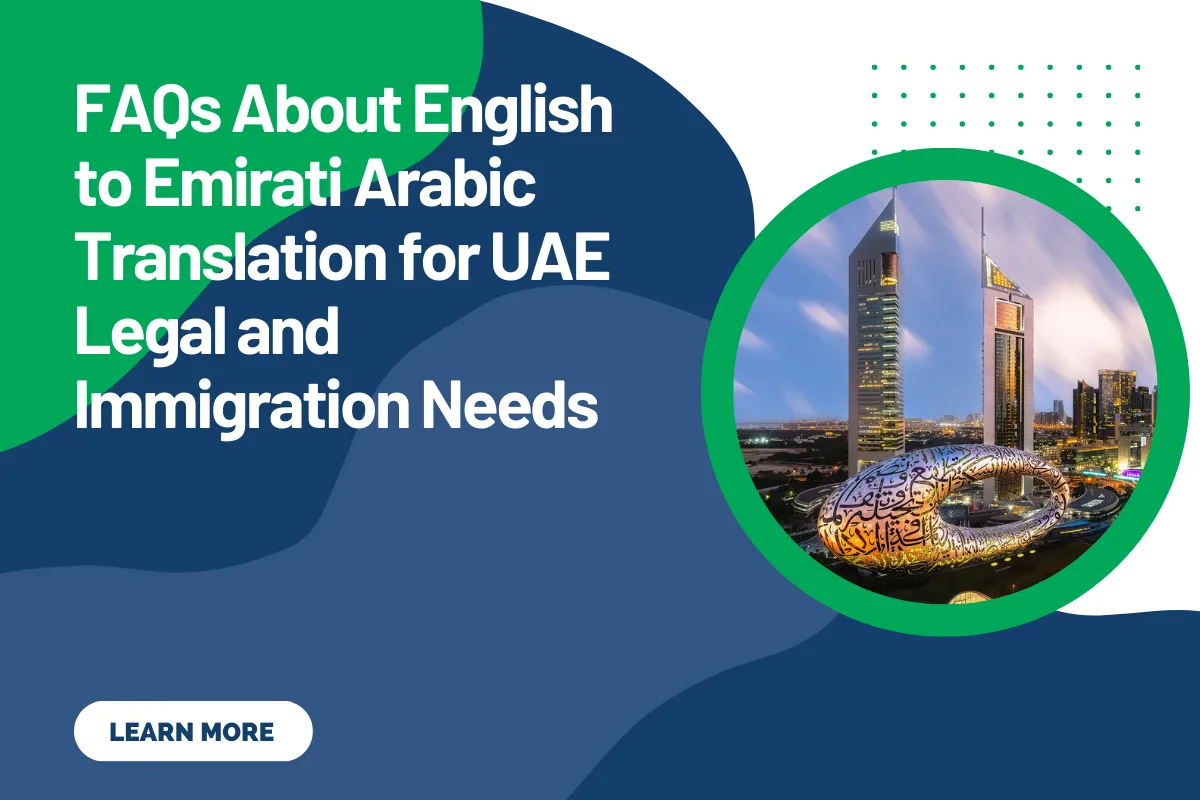
UAE authorities expect clear, accurate translations. If your documents are in English, you often need English to Emirati Arabic for court filings, visa applications, or licensing. This FAQ breaks down what that means, who can do it, and how to avoid delays.
Q Links Legal Translation Services supports people and organizations across the UAE with compliant, officially accepted work. Here, we keep things simple: what to submit, what to check, and how to plan timelines. No fluff, just practical steps that help your files pass review the first time.
You will also see how this ties into broader guidance on English to Emirati Arabic translation for personal, business, and legal use in Dubai, plus quick comparisons so you can pick the right approach for each task.
Table of Contents
Quick Summary
Legal and immigration bodies in the UAE want translations that are clear, consistent, and complete. That means the translator follows the source exactly, captures seals and stamps, and uses the right format and date styles. Small slips with names or numbers can cause rejections.
Use a specialist when documents affect legal status, employment, court records, or government filings. Plan ahead, gather clean scans, confirm the target authority’s requirements, and set realistic timelines. If in doubt, ask for a brief review before you submit. These steps reduce rework and help your case move without stress.
What does English to Emirati Arabic legal translation mean?
It is the accurate rendering of your source text from English into Emirati Arabic for official use. A compliant file mirrors the layout where needed, includes stamps and notes, and keeps names, dates, and numbers consistent. For deeper background and practical examples, read The Complete Guide to English to Emirati Arabic Translation for Personal, Business, and Legal Use in Dubai.
Many submissions also require a translator’s statement or seal. Ask the receiving body what they accept. Mark if you need a certified translation so the output includes the proper stamp and wording.
Which documents need translation for UAE legal and immigration?
For Immigration & Visa Services, you may need translations of passports, birth or marriage certificates, police records, employment letters, bank letters, or medical fit notes. For Legal Services, you may need contracts, court orders, powers of attorney, corporate records, or witness statements.
Requirements change by authority and case type. Check the receiving office’s latest list and formatting rules before you start. When in doubt, translate the full set of legal documents you plan to submit, not just selected pages.
Who is qualified to translate and stamp your documents?
Some cases accept competent bilinguals. But most legal and immigration cases prefer recognized legal translators. Always check if the authority needs a statement, seal, or specific wording. A sworn translator or officially recognized provider is usually required for courts and many government submissions.
Look for experience in the exact document type. A translator who often handles court texts, company records, or civil status files will know common pitfalls and how to format seals, page numbers, and annexes properly.
Common mistakes to avoid with legal and immigration files
Name mismatches cause delays. Ensure spelling of names matches passports and IDs, including order and spacing. Date formats are another trap. Confirm the format required by the authority and keep it consistent across all files.
Do not skip seals, stamps, or margin notes. Note them in the translation if they cannot be reproduced. Watch out for transliteration of names and places; use one system and stick to it across the case file to avoid confusion.
A simple 5-step framework to get it right
Use this practical flow. It keeps your case tidy and reduces resubmissions. For more context on terminology, formatting, and examples across personal, business, and legal use, you can also browse the complete guide on this topic.
- Collect clean source files. Gather originals or high-quality scans and confirm authority rules. Note any stamps to be rendered. Flag if you need a quality check with a second linguist.
- Confirm names and dates. Align spelling with passports and IDs. Set one date format for all files.
- Translate and format. Mirror structure where needed. Keep tables, footnotes, and annex labels clear.
- Review against the source. Check numbers, names, seals, and signatures. Finalize any glossary choices.
- Issue the final package. Include translator statement or seal if required, and deliver PDF plus hard copy if requested.
When to use professional help and what to expect
Use a specialist when the file affects status, rights, or financial stakes. This includes visas, residency, company setup, court filings, and notarized powers of attorney. Expect clear timelines, a formal translator statement or seal when needed, and guidance on submission format.
If you need guidance or certified outputs for your case, explore English to Emirati Arabic to understand how professional handling works from intake to final delivery. Solid providers also explain re-issue policies for minor edits and maintain strict confidentiality across your files.
Timelines, formats, and delivery planning
Short documents can be quick, but complex sets with annexes and stamps take longer. Plan sufficient time for checks and approvals. Ask for working drafts only if the authority allows it.
Final delivery is often a sealed PDF plus, when requested, a stamped hard copy. State upfront if you need a turnaround time guarantee to match an appointment date.
Digital vs paper copies and acceptance tips
Many authorities accept sealed PDFs for first review but may ask for hard copies later. Keep your originals safe and ready. Do not alter a sealed translation PDF; request a re-issue for any updates.
If a notary or authority asks for extra steps like notarization, confirm the sequence and who handles it. Store all receipts and reference numbers alongside your case file for easy tracking.
Human, machine, or certified: a quick comparison
Choose the approach that matches the risk and the authority’s rules. For government or court use, prioritize recognized legal output. For internal drafts, lighter options may be fine.
| Option | Pros | Cons | When acceptable |
|---|---|---|---|
| Machine translation | Fast, low effort | Errors with legal terms; no stamps | Internal drafts or notes only |
| Bilingual colleague | Context aware, flexible | Not officially recognized; risk of rework | Informal use, non-filing content |
| Professional legal translator | Accurate terms; accepted formats | Needs scheduling and review | Courts, visas, corporate and official filings |
Terminology, dialect, and clarity
Emirati Arabic is used across legal and public settings in the UAE. Clear terminology helps reviewers scan faster. A skilled Emirati Arabic translator will manage legal nuance while keeping plain wording where possible.
Set a glossary for names and key terms early. If your case spans Legal Services and Immigration & Visa Services, use one set of terms across both tracks to avoid mixed phrasing.
FAQ: Short answers to common questions
Often yes, especially for courts and immigration. Some bodies accept English for certain steps, but many still ask for Arabic at final submission. Always check the receiving office’s rules first.
General handles everyday text. Legal needs precise terms, layout care, and often a statement or seal. An experienced Emirati Arabic legal translator understands forms, annexes, and how to reflect stamps.
No, it risks errors and rejection. Use a human specialist. For informal drafts, machine output can help you brainstorm, but never submit it to authorities.
Match names to passports and IDs. Pick one date style and stick to it. Ask the translator to flag any mismatches during review before finalizing.
Some do at first review. Many still ask for a sealed PDF and, at times, a stamped hard copy. Keep originals handy in case they are required later.
Legal experience, strong Arabic drafting, careful formatting, and knowledge of immigration or court processes. A seasoned Emirati Arabic legal translation provider will also maintain a clear audit trail.
Conclusion
For legal and immigration work in the UAE, get your English to Emirati Arabic translation right the first time. Align names and dates, choose the right level of service, and keep stamps, notes, and annexes clear. Use the framework above, and refer back to the full guidance when your case feels complex.
If you need calm, steady help on sensitive files, contact Q Links Legal Translation Services for expert assistance. The right plan, timeline, and review steps reduce stress and protect your submission. With the proper translator, clear formats, and tidy records, your documents stand the best chance of smooth, official acceptance.